Lance Morrow Quotes
Religious hatreds tend to be merciless and absolute.
Lance Morrow, Jornalist, Time, March 15, 1993
Sourced by: Eigen's Political and Historical Quotations


Pandita Indrani Rampersad. She is the first Hindu woman who ever became a pundit—a religious expert who guides Hindus. She is also a professor in the United States.


He commonly incites Muslims to violence against other religions which he believes totally false. Therefore, in his interpretation of Islam, it is the obligation of Muslims to kill the heretics and blasphemers. See {620307}. He was one of the leading inciters of the Bali bombing which killed so many tourists. Notice the classic attempt to first dehumanize the people who are to be the targets of violence and atrocities to overcome the normal inhibitions of most humans to do violence to another.

The King, a religious exremist fanatic, was a great supporter of the Inquisition whose excesses were horrible during his reign.


The amazing thing about this quotation of 1913 is that at the end of the 20th century the Christians were again at the Muslims throats and Bosnian Muslims were being murdered and ethnically cleansed by the Roman Catholics of Croatia and the Eastern Orthodox Christians of Serbia. The hatred had persisted—the legacy of 1000 years before.


The Nazis did not create German anti-Semitism for the first time. Germany had a long brutal history of murder and torture. Luther was a virulent Anti-Semite. But he was not always such. See {629231} for totally contradictory writing earlier in his career. The Modern Lutheran Church does not currently follow any of Luther’s anti-Semitic dicta and has repudiated his views on murder for the glory of the religion, although many did support it in WWII. What is stunning about this quotation is that this religious leader was advocating burning houses of God, schools and people for the “glory” of God and Christianity. However all major religions had viscous and bloody pasts. Most adherents have rejected that past as being misguided, primitive and incompatible with the modern, more noble view of the religion while only a few religious extremist fundamentalist still adhere to the darker history and interpretation of the religion.

The Alawites, always a Muslim minority in Syria, have been hated, distrusted, discriminated against, and physically persecuted by the majority Sunni Muslims as long as they have existed. When in Syria, the Alawites, although a minority, gained political control of the country and for the first time were secure in their own country. In the early 2000s, the Sunni majority tried to oust the Alawite leadership, but the Assad government put down the protests brutally. Most Western observers did not know of the anti-Alawite history of persecution in Syria. Returning to that position of victimization was so feared by the Alawites that they fought tooth and nail, murdering many civilians, to be sure that the historical position of the Alawites would not occur again. This makes talks and negotiations over the Syrian Civil War so difficult. The Alawites believe that if they do not control the nation, they will be massacred by the majority. The Christians and the Jews also believe that if the Sunni’s get control, their communities will be in great danger. Complicating the situation even further, is that fact that of the insurgent Sunni groups, the tolerant secular ones who started the revolution are no longer in control of the insurgents. De facto dominance has passed to the Jihadist, Islamic extremists who hold the view expressed by this quotation.


Many people have believed that the Nazis introduced anti-Semitism into German society and politics. This quotation is one of the very many what show that anti-Semitism was rife in Germany before Hitler ever came to power—back to the Dark Ages. The Nazis recognized it and took advantage of it by ascribing all of Germany’s ills to the Jews, knowing full well that there was underlying public opinion that would make that a good tactic.
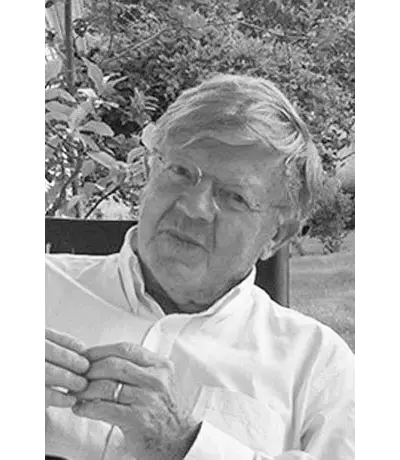
Lance Morrow is an American essayist and writer, chiefly for Time magazine, as well as the author of several books. He won the 1981 National Magazine Award for Essay and Criticism and was a finalist for the same award in 1991. He has the distinction of writing more "Man of the Year" articles than any other writer in the magazine's history and has appeared on The Late Late Show with Craig Ferguson and The O'Reilly Factor. He is a former professor of journalism and University Professor at Boston University.
