David Lange Quotes
Our military forces are an arm of government, just like the Department of Social Welfare, although probably less able to inflict widespread harm
David Lange, 1942-2005, New Zealand Prime Minister, Attack on the Department of Social Welfare Bureaucracy
Sourced by: Eigen's Political and Historical Quotations


The founding fathers antipathy to standing armies had an historical basis, even in England.

This was an official publication of the U. S. Army. The First World War had very little affect on future military preparedness At that time conservatives in Congress were very isolationist and military preparedness was not a high priority or even a significant political issue. The Democrats then were more supportive of military spending than the Republicans. It took World War II, for which America was very unprepared, to produce a change in public and political opinion regarding military preparedness.


This quotation illustrates some of the interesting attitudes of early Americans. First, note the backhanded slap at a standing army. The navy was much preferred by early Americans as history had demonstrated that most republics had been destroyed by their own armies taking over in some “emergency” of time of “crisis.” This also helps explain why the army and navy were different departments of government—a tradition that lasted until after WWII. The two departments had totally different purposes and objectives and presented different potential dangers to the nation.

Commenting on the hostilities between the Baltic states and the Russian government:

After American troops were deployed to Saudi Arabia following Iraq's invasion of Kuwait:


In early America, there was great concern about a standing army—a military force that exists and is organized in peacetime. History showed the founding fathers that tyrants who siezed power almost always did so by getting control of the standing army. The logic was if there is no standing army, no one can control it and therefore no tyrant can control the country by force. At the time, however, with oceans protecting us, there was penty of time to mobilize a defensive army should any foreign power invade. However, with modern military technology, and the importantance of retaliation as a protective3 strategy, it is virtually impossible to not have a standing army and stoll be secure.


Shortly thereafter, Ma Hongkui, and his soldiers ran for their lives and barely escaped to Taiwan as the Communists took over all of the Chinese mainland.

Japan was a militarist aggressive state when they started WWII in the Pacific. Their military brutalized China and almost every other country in Asia committing atrocities that those nations still are bitter about today. The unconditional surrender required that their new Constitution prohibit a military. However some of the Conservatives like Abe do not believe that Japan should be the only nation denied a military. Most of the rest of Asia even resents and fears the defense forces that they have and would seriously oppose a reestablishment of a military.

Congress and most of the Founding Fathers were very distrustful of standing armies. They were aware that standing armies had taken over societies ever since ancient Rome and Julius Caesar.

Mao and other Chinese leaders molded the people into an Army to fight the invading Japanese in WWII after which they were attacked by Chiang Kai-shek’s Nationalists. In a remarkable trek of escape the Communists moved across China to escape the nationalists while the Red Army provided protection. Without the Red Army, the Communists would easily have been overrun then and after the Nationalists “escaped” to Taiwan they planned and threatened to invade the mainland. It was the Red Army that kept them at bay, and so the “People’s Army” has an emotional, historical and intellectual impact and role even in 21st Century China when there really are no enemies that would attack China.
After the breakup of the Soviet Union, NATO expanded to include some fo the former Soviet Nations thus moving NATO territiry to the East--closer to Russia, whose leaders percieved that the expansion was hostile and dangerous for the indpendence of Russia. What made the situation more complex is that the American Secretary of State, when the Soviet Union was very powerful, had made an agreement with the Soviets that in return for Russian aquiessance of NATO being extended to East Germany, NATO would not expand further West. But after the collapse of the Soviet Union, Russia was quite weak and NATO expanded east despite the earleir comittment. The US and th eother NATO counties took the pozition the previous comitmnts were not binidng as they were never formally signed. The Russians then decided to take a hard line position and flaunt and use military force to which would stop the Western expansion closer to the Russian border.

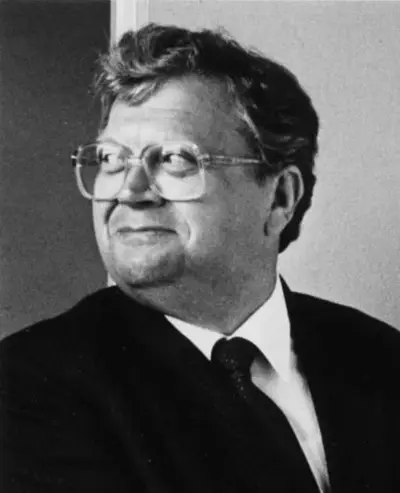
David Russell Lange ONZ CH PC was a New Zealand politician who served as the 32nd Prime Minister of New Zealand from 1984 to 1989.
