Louis D. Brandeis Quotes
Our government is the potent, the omnipresent teacher. For good or for ill it teaches the whole people by example. Crime is contagious. If the government becomes a lawbreaker, it breeds contempt for law; it invites every man to become a law unto himself; it invites anarchy. To declare that in the administration of the criminal law the end justifies the means - to declare that the Government may commit crimes in order to secure the conviction of a private criminal - would bring terrible retributions.
Brandeis, Louis D. Dissenting opinion. Olmstead v. United States. 277 U.S. 438. Supreme Court of the US. 1928.


There were anti-Vietnam war protests going on throughout the country that year. In many of them, especially at universities, protesters took over buildings, and shut down operations. Most Republicans and many Democrats wanted the protests to end, mostly because they feared the spread of the anti-Vietnam war sentiment would catch on and become a position held by most Americans (which it did just as they feared,) They were restrained in what they could do legally by the 1st Amendment. However, there was much breaking of minor laws in many of the demonstrations and that was the focus of the effort to suppress the demonstrations. But in the tradition of civil disobedience, it was the lawbreaking that tended to get the press attention and coverage, so the leaders of the anti-war movement advocated even more lawbreaking, hence Dirksen’s statement to the convention.


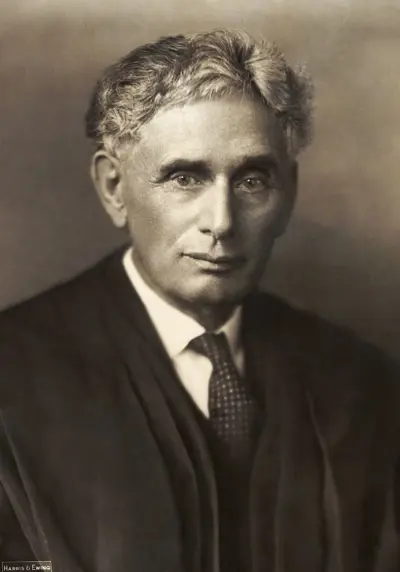
Louis Dembitz Brandeis was an American lawyer and associate justice on the Supreme Court of the United States from 1916 to 1939. He was born in Louisville, Kentucky, to Jewish immigrant parents from Bohemia (now in the Czech Republic), who raised him in a secular home. He attended Harvard Law School, graduating at the age of 20 with the highest grade point average in the law school's history. Brandeis settled in Boston, where he founded a law firm (that is still in practice today as Nutter McClennen & Fish) and became a recognized lawyer through his work on progressive social causes.
