Henry David Thoreau Quotes
I say, break the law.
Thoreau, Henry David. "Resistance to Civil Government." Æsthetic Papers, edited by Elizabeth P. Peabody, The Editor, 1849, p. 196.


The Punjab, like Afghanistan and some other areas had no real tradition of government. The Sikhs of the Punjab had initiated a war with the British Colonial Empire—The 1st Anglo-Sikh War—which ended with a decisive British victory and a peace treaty where the rulers of the Punjab agreed to keep the peace. However, they really could not control the population and some Sikhs again attacked British and Muslim interests. The Governor-General reported that treaties and commitments with the Punjab leaders really meant little. The British also won the 2nd Anglo-Sikh War.

There were anti-Vietnam war protests going on throughout the country that year. In many of them, especially at universities, protesters took over buildings, and shut down operations. Most Republicans and many Democrats wanted the protests to end, mostly because they feared the spread of the anti-Vietnam war sentiment would catch on and become a position held by most Americans (which it did just as they feared,) They were restrained in what they could do legally by the 1st Amendment. However, there was much breaking of minor laws in many of the demonstrations and that was the focus of the effort to suppress the demonstrations. But in the tradition of civil disobedience, it was the lawbreaking that tended to get the press attention and coverage, so the leaders of the anti-war movement advocated even more lawbreaking, hence Dirksen’s statement to the convention.


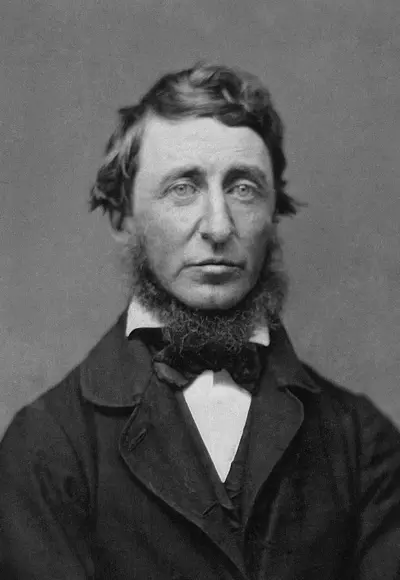
Henry David Thoreau was an American naturalist, essayist, poet, and philosopher. A leading transcendentalist, he is best known for his book Walden, a reflection upon simple living in natural surroundings, and his essay "Civil Disobedience" (originally published as "Resistance to Civil Government"), an argument for disobedience to an unjust state.
