Charles Fried Quotes
Our economy of allegiance simply is not infinitely expandable. If we become more Virginian or Georgian, surely we will also feel more remote, less responsible for the poor of Kentucky or of the ghettoes of Chicago. If we became more Virginian, we would be less American.
Charles Fried, Solicitor General of the United States, Massachusetts Supreme Court Justice, Quoted in The Washington Post, August 20, 2007
Sourced by: Eigen's Political and Historical Quotations


The North and the South had major differences on the issue of Spanish Florida and whether or not the U. S. should expand by force. Northerners were generally opposed while the South had an opposite view.

Samuel Langhorne Clemens, 1835-1910

At the time sectionalism was extensive in America. Most Iowa and Northern families still remembered a relative who had been “killed by the rebels” in the Civil War. The South still resented the rest of the country. The East and Midwest had much better educated than the rest of the country. Most important, there was very little contact between Americans of different sections. Until the great Eisenhower initiative of a National Highway System sectionalism was common. Presidents were constantly trying to develop a national American spirit.


At the time, there was very little national news in most newspapers and almost none about local areas and peoples other than the newspaper’s town. With the exception of New York and a few other cities, there was no news on the radio and TV had not yet been deployed. Most of the nation was very insular. It would not be until the Eisenhower administration that the national highway system was built. Most American spent their entire lives within 90 miles of their home and knew little about anywhere else other than NY, Chicago, Hollywood, Washington, and San Francisco.


See {641733} for some background on the problem.

This statement was more than a proverb but a popular political doctrine as well which had for years destabilized the Balkans. From the Serbian point of view, if a Serbian family moved to Bosnia or another country, their family land and their decedents were Serbian and under the governance of Serbia. Where there were enclaves of Serbs, they and the Serbian Government considered that land Serbian. This attitude even widely prevailed into the 21st century and led to the U. S. War with Serbia over the Serbian attempts to control parts of neighboring countries where Serbs were in the minority. The Serbs were not unique in this respect. Germany, in WWI, had seized territory from France because there were large enclaves of Ethnic Germans in the Sudetenland. The Ancient Romans likewise asserted the protection of Roman Citizens anywhere in the known world.


The Southern authorities were particularly angry with people form the North coming South to demonstrate over unconstitutional and immoral segregation laws. Northerners were considered as having no business with Southern desegregation. Mrs. Peabody, and the wives of a number of wives of Christian Bishops, black and white, went to a restaurant in St. Augustine and requested service which was contrary to the segregation laws of Florida at the time. The women were arrested. The act of civil disobedience in integrating the restaurant was one act of a planned desegregation strategy worked out with Martin Luther King’s SCLC organization. The mature age of the women and their prominent husbands brought a great deal of newspaper coverage which is just what the demonstrators wanted. The photo is of Mrs. Peabody getting arrested. See {637404} and {637406} for more on this incident.

See {640107} for another quotation creating this so called union. It made great sense to the King, but little to the Poles and Lithuanians who each saw themselves as a very different people and wanted little to so with the other.

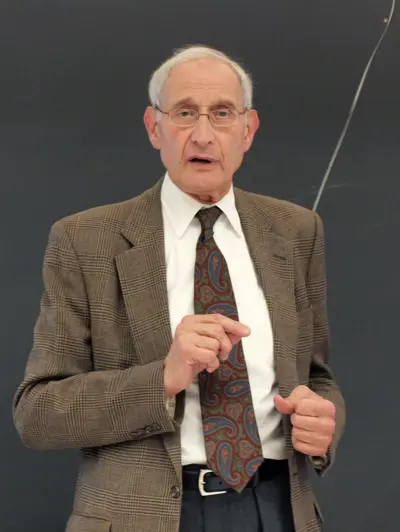
Charles Anthony Fried is an American jurist and lawyer. He served as United States Solicitor General under President Ronald Reagan from 1985 to 1989. He is a professor at Harvard Law School and has been a visiting professor at Columbia Law School. He also serves on the board of the nonpartisan group, the Campaign Legal Center.
