China Quotes
Local Nationalism
See {641733} for some background on the problem.
Name for Chinese Crime for which ethnic leaders were prosecuted, 1950s, Quoted in Foreign Affairs, May-June. 2015
Sourced by: Eigen's Political and Historical Quotations

This has been a classic dilemma for all large multi ethnic states—trying to develop a sense of unity of citizenship in the face of populations who think of themselves foremost differently. Attempts like this of banning the names of the peoples from official use, banning languages, changing people’s names, requiring common dress and other such methods have failed in most cases (Ataturk’s Turkey being the notable exception). America, Great Britain and the Soviet Union showed the world that it was possible to have a strong sense of national unity and at the same time allow peoples, cultures, and ethnicities to maintain their own ethnic identities. However, many modern governments see their situation as so unique that ethnic repression of one kind or another is required. Modern China, in particular, while not as extreme as Sun Yat-Sen still makes it very difficult for certain cultures to thrive such as the Tibetans. Note that even in the United States we have many who argue that non English language usage should be discouraged and disapprove of the concept of hyphenated Americans. For example, see Theodore Roosevelt {631377}.


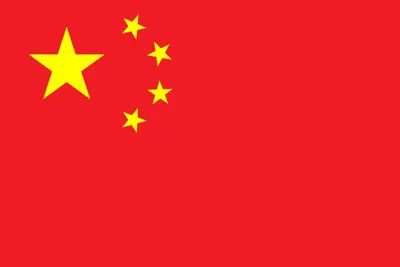
China, officially the People's Republic of China (PRC), is a country in East Asia. It is the world's most populous country, with a population of around 1.4 billion. Covering approximately 9.6 million square kilometers (3.7 million mi2), it is the world's third or fourth-largest country by area. The country is officially divided into 23 provinces, five autonomous regions, four direct-controlled municipalities (Beijing, Tianjin, Shanghai, and Chongqing), and two special administrative regions of Hong Kong and Macau.
