Ernest Andre Gellner Quotes
Nationalism usually conquers in the name of a putative folk culture.
Ernest Andre Gellner, 1925-1995, French Philosopher and Social Anthropologist, Quoted in John Bodnar, Remaking America: Public Memory, Commemoration, and Patriotism in the Twentieth Century
Sourced by: Eigen's Political and Historical Quotations


This parochial and sectional point of view was held much more strongly by the South and to a great extent, still is. We are all conflicted by wanting and American culture (that can be adopted by the world in globalization) and also wanting local customs, cultures, norms, policies and thought patterns to exist. However, there is inevitable conflict between the two, so it is a constant American source of debate, ebb and flow.


This statement was more than a proverb but a popular political doctrine as well which had for years destabilized the Balkans. From the Serbian point of view, if a Serbian family moved to Bosnia or another country, their family land and their decedents were Serbian and under the governance of Serbia. Where there were enclaves of Serbs, they and the Serbian Government considered that land Serbian. This attitude even widely prevailed into the 21st century and led to the U. S. War with Serbia over the Serbian attempts to control parts of neighboring countries where Serbs were in the minority. The Serbs were not unique in this respect. Germany, in WWI, had seized territory from France because there were large enclaves of Ethnic Germans in the Sudetenland. The Ancient Romans likewise asserted the protection of Roman Citizens anywhere in the known world.


See {640102} and {640101} for his view of what a nation is not.

Note the belief that the author has the belief that over time homogeneity is important in a state, whereas the most successful modern states have been ones that are diverse—i.e. America, Britain, China, France. There have been some small successful states like Norway that are homogeneous, but large states need the heterogeneity.

See {641733} for some background on the problem.
This mode of national definition is characteristic of many nations of Europe as well.


The writer was born and brought up a Muslim and because he criticizes Islam, he has had a death fatwa issued against him much like Salman Rushdie.


Those same qualities that Hearn extolled in 1895 which maintained the Japanese Empire against external forces, also were instrumental in the transition to militarism and expansionist aggression that Japan would develop on the 1930s and which led to WWII and the Japanese conquest of much of Asia and eventual defeat for the Japanese.
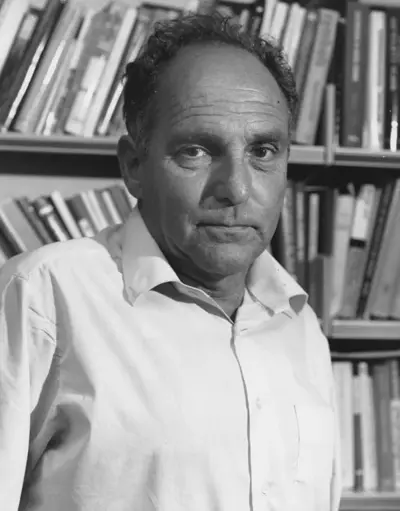
Ernest André Gellner was a British-Czech philosopher and social anthropologist described by The Daily Telegraph, when he died, as one of the world's most vigorous intellectuals, and by The Independent as a "one-man crusader for critical rationalism".
