Wilfred Burchett Quotes
Of thousands of others, nearer the centre of the explosion, there was no trace. They vanished. The theory in Hiroshima is that the atomic heat was so great that they burned instantly to ashes - except that there were no ashes.
Burchett, Wilfred. "The Atomic Plague." Daily Express, 5 Sept. 1945, p. 1.


This was the first Russian atomic explosion.


This was the order for the dropping of the first Atomic bomb on Hiroshima.


On March 9-10, 1945, over three hundred B-29 Superfortresses, loaded with 2,000 tons of incendiary bombs flew over Tokyo bombing the city in waves for 6 hours. Over 250,000 buildings were destroyed and more people killed than would be in either Hiroshima or Nagasaki which were destroyed by atomic bombs. The fact that the Japanese would not surrender even after such complete destruction of their capital and largest industrial city, was used by American leaders in assessing whether to use the atomic bomb afterwards. There were many who believed that the atomic bomb would not be enough for motivate a Japanese surrender as Japanese culture prohibited surrender. Indeed, even after the 1st atomoc bomb, the Japanese did not surrender, and after the 2nd, the war council was split 3-3 and the Emperor historically broke the tie. Even the atomic bomb might not have worked. Later generations found this resistance to surrender hard to understand but Japanese culture was amazingly strong then.

The Scientific Project that developed the Atomic Bomb. In the development of the atomic bomb there was a hypothetical possibility that the Earth as we know it might be destroyed. Robert Oppenheimer the scientist who directed the bomb development and his staff framed the question which Oppenheimer presented to Arthur Compton. The decision was that Oppenheimer’s team would calculate every possibility and make sure that such a catastrophe was not within the realm of possibility. They did all the calculations, concluded that there was no possibility, the bomb was exploded, and the question was then finally answered in the negative.


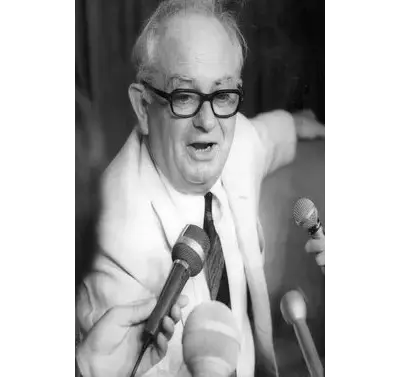
Wilfred Graham Burchett was an Australian journalist known for being the first western journalist to report from Hiroshima after the dropping of the atomic bomb, and for his reporting from "the other side" during the wars in Korea and Vietnam.
