Lydia Millet Quotes
In Hiroshima, bombed Aug. 6, 1945, no warning was given of the air attack, and thus no escape was possible for the mostly women, children and old people who fell victim.
Millet, Lydia. Opinion Editorial. The New York Times, The New York Times Company.


Although generally a right wing conservative, Clark today sounds like almost like an extreme leftist on the issue. At the time however, many thought that he had taken leave of his senses. He not only was completely contrary to bipartisan national policy but opposed by almost universal American public opinion. He is one of the very few significant American officials to oppose the war policies.

On March 9-10, 1945, over three hundred B-29 Superfortresses, loaded with 2,000 tons of incendiary bombs flew over Tokyo bombing the city in waves for 6 hours. Over 250,000 buildings were destroyed and more people killed than would be in either Hiroshima or Nagasaki which were destroyed by atomic bombs. The fact that the Japanese would not surrender even after such complete destruction of their capital and largest industrial city, was used by American leaders in assessing whether to use the atomic bomb afterwards. There were many who believed that the atomic bomb would not be enough for motivate a Japanese surrender as Japanese culture prohibited surrender. Indeed, even after the 1st atomoc bomb, the Japanese did not surrender, and after the 2nd, the war council was split 3-3 and the Emperor historically broke the tie. Even the atomic bomb might not have worked. Later generations found this resistance to surrender hard to understand but Japanese culture was amazingly strong then.

Bethe and other European refugees joined American and British scientists at Los Alamos, NM, for the development of the atomic bomb.

He was the first man to see the experimental evidence of nuclear power and he realized that it had the potential for an incredibly powerful weapon. It was his message about the possibilities about the atomic bomb that Albert Einstein transmitted to FDR, leading to American development of the bomb.(See {624449}.) By the time the atomic bomb had been developed, Germany had surrendered and Szilard and others felt that there was no longer a need to beat the Germans to the development. So he went from the biggest enthusiast to the most serious opponent.
There were an additional 69 co-signers at the Manhattan Project "Metallurgical Laboratory" in Chicago


One of the predictions of the oncoming war with Germany.

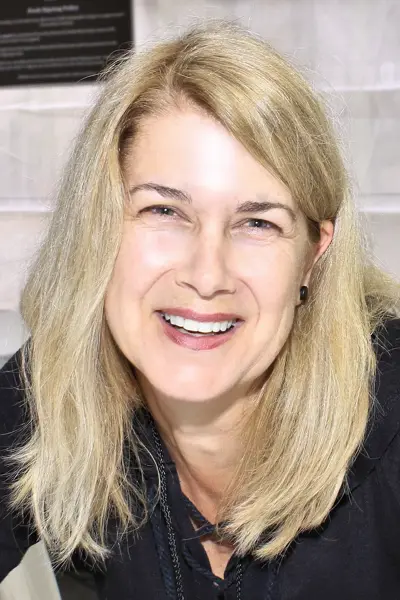
Lydia Millet is an American novelist. Her most recent novel, A Children's Bible, was a finalist for the 2020 National Book Award for Fiction and named one of the ten best books of the year by the New York Times Book Review. She has been a finalist for the Pulitzer Prize and the Los Angeles Times Book Prize. Salon wrote of Millet's work, "The writing is always flawlessly beautiful, reaching for an experience that precedes language itself."
