Max Boot Quotes
The 60th anniversary of the atomic bombing of Hiroshima on Aug. 6, 1945, has not so far provoked the kind of anguished debate that accompanied the 50th anniversary. The lack of controversy is fitting because there wasn't much soul-searching at the time.
Boot, Max. "Hiroshima: The 60th Anniversary." Los Angeles Times, 5 Aug. 2005.


Although generally a right wing conservative, Clark today sounds like almost like an extreme leftist on the issue. At the time however, many thought that he had taken leave of his senses. He not only was completely contrary to bipartisan national policy but opposed by almost universal American public opinion. He is one of the very few significant American officials to oppose the war policies.

Bethe and other European refugees joined American and British scientists at Los Alamos, NM, for the development of the atomic bomb.

This was one of several petitions that were sent to the President by groups of scientists who were working on the development of the atomic bomb. The major objective of the scientists was to demonstrate the power of the bomb before it was used. The President did not select this policy of demonstration as the invasion of the Japanese mainland was imminent and America only had two bombs—one a uranium and the other, plutonium. If the demonstration would not produce the unconditional surrender, then there would only be one weapon left and it would take months to produce another. This was the strongest argument against using up a bomb. It was somewhat borne out when the Japanese did not surrender after the first bomb had been dropped on Hiroshima. It took the second.


Only three days later the Russians detonated their first atomic device.


This quotation is very important in helping to understand the 1950s in America with respect to nuclear weapons policy. McCormick was one the better educated, sophisticated, and influential Americans. Yet he appears to be a technological and nuclear ignoramous. Most people had not yet realized that atomic weapons were not just much larger traditional bombs. They could do terrible damage, but it would always be localized they thought. Chicago might be destroyed but the people out of range would be OK. He never got it that a dirty bomb could be dropped on Detroit and depending on which way the wind is blowing could wipe out Chicago and much of the Midwest as well. He knew nothing of the genetic effect the radiation, nor the implications for the environment of maintaining a large nuclear manufacturing industry. He and many like him did not realize that after the first bombs were created, how easy it would be for the Russians and others to also develop a nuclear arsenal. And 50,000 warheads was just a matter of effort. The implications of these things would inhibit our carrying out his and others ideological views of foreign policy. Oppenheimer and most nuclear scientists explained all this, but believing them and acting on those beliefs would have been too much of a change.

Truman had been briefed on the number of Japanese who committed suicide rather than surrender—including civilians—in Saipan, Okinawa, Iwo Jima, and other locations where United States troops had invaded. He and his experts agreed that the Japanese would not surrender unless there was a new dramatic factor that was outside the usual thinking—the atomic bomb. He was proved right about the warning. Not only did the Japanese ignore it, but they did not even surrender after the nuclear devastation at Hiroshima. It took a second bomb dropped on Nagasaki to motivate the surrender. So even a demonstration with all those Japanese casualties did not cause the surrender until it was repeated.

This prediction was sadly terribly accurate. Nuclear terrorism is a realistic threat at the millennium. Pannekoek was one of the first to predict it.

For a similar view from the eyes of an American, see Pearson {612242}.


The Scientific Project that developed the Atomic Bomb
The Scientific Project that developed the Atomic Bomb. Oppenheimer was the great physicist who directed the successful development of the atomic bomb so as to build the weapon before Hitler did in World War II. However, as the technology evolved, he had doubts as to the wisdom of creating even more powerful hydrogen weapons. His viewpoint was hurting the administration’s policy of rapid unlimited nuclear weapons development, and he was the victim of a character assassination whereby his security clearance was withdrawn. The “father” of the atomic bomb was the first American casualty of atomic weapons development.

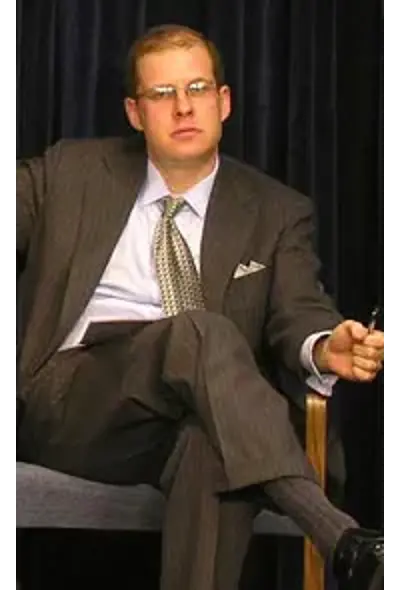
Max A. Boot is a Russian-American author, consultant, editorialist, lecturer, and military historian. He worked as a writer and editor for Christian Science Monitor and then for The Wall Street Journal in the 1990s. He is now Jeane J. Kirkpatrick Senior Fellow in National Security Studies at the Council on Foreign Relations and a contributor to The Washington Post. He has written for numerous publications such as The Weekly Standard, the Los Angeles Times, and The New York Times, and he has also authored books of military history. In 2018, Boot published The Road Not Taken, a biography of Edward Lansdale, and The Corrosion of Conservatism: Why I Left the Right, which details Boot's "ideological journey from a 'movement' conservative to a man without a party" in the aftermath of the 2016 presidential election.
