Werner Heisenberg Quotes
Reports in Washington show that our reasoning was just like that of your physicists. With all this information available, at least to privileged persons, I cannot understand why it is generally held in the United States that we completely missed the basic principle of the bomb until after Hiroshima.
Heisenberg, Werner. Interview by Joseph J. Ermenc, 28 Aug. 1967. Atomic Bomb Scientists: Memoirs, 1939-1945, edited by Joseph J. Ermenc, Meckler, 1989, p. 45.


Bethe and other European refugees joined American and British scientists at Los Alamos, NM, for the development of the atomic bomb.


Perez was a virulent racist who was the strongest political boss in Louisiana. Perez wanted to maintain segregation despite any Federal Court orders, and if the Federal Government would send Federal Marshalls or Federal Troops to enforce desegregation court decision, he would have the Louisiana State Police keep them out or the state, even if it came to a shooting battle. The Governor used this quotation to talk him out of the idea.

Canada had the same absurd civil defense propaganda in the Cold War as the U. S. did. Both governments wanted to persuade their publics that a nuclear attack was survivable.

3 days later, President Truman, announced that the Russians had successfully developed an atomic weapon. This quotation gives us another example where the Central Intelligence Agency failed to predict and/or warn America about a crucial event. Others included the North Korean invasion of South Korea, the Arab Spring, the Soviet invasion of Afghanistan, the fall of the Berlin wall, and the collapse of the Soviet Union.


Only three days later the Russians detonated their first atomic device.


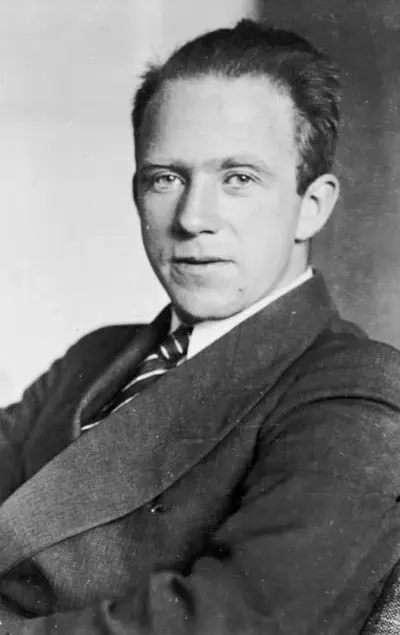
Werner Karl Heisenberg was a German theoretical physicist and one of the key pioneers of quantum mechanics. He published his work in 1925 in a breakthrough paper. In the subsequent series of papers with Max Born and Pascual Jordan, during the same year, this matrix formulation of quantum mechanics was substantially elaborated. He is known for the uncertainty principle, which he published in 1927. Heisenberg was awarded the 1932 Nobel Prize in Physics "for the creation of quantum mechanics".
