E. Belfort Bax Quotes
No one, nowadays, pretends that juridical action alone can directly produce any fundamental economic change, but it can certainly put the capitalist in a tight place, and the special advantage of the measures proposed is that they admit of being strengthened or relaxed without violent disturbance of the status quo.
E. Belfort Bax, 1854–1925, English Attorney, Journalist & Philosopher, “After the Eight Hours Bill,” Justice, April 30, 1892
Sourced by: Eigen's Political and Historical Quotations

Executed by the English for his part in the Easter Uprising. Connolly was a socialist advocate as well as a republican. He was one of the first revolutionaries to understand that military occupation was only a part of forces that kept a nation subservient to another. However, attempts to break those economic ties have almost always led to economic ruination.

The first quotation was made shortly after the launching of The Clarion in 1891. The newspaper was relatively successful but while England moved more to the left, socialism was not embraced by Englishmen. Later, Blachford concluded that the conversion would not likely take place soon.

The first sentence is often quoted by conservatives in defense of the capitalistic system. However most do not realize that Haldane was actually a socialist who was opposed to capitalism. They were unaware of the second sentence which would make them as unhappy as the first made them happy.


At the time, this was not popular with many socialists who had given up on the lack of fairness and equity of the capitalistic system. A century later, most politicians and political philosophers had given up on socialism ever meeting Bauer’s test, and Capitalism was well ensconced in Western Democracies.


Many of the far left grew disillusioned with the British Labor Movement and how it was relating to the capitalist companies, the government, and the workers. The Unions had become very undemocratic and controlling with the government pressuring both labor and companies to the degree that many felt that the institutions themselves were no longer free institutions. Ironically, they preferred the open competition of the American system at the time where unions and companies were free to fight out their differences.


3rd Earl Russell of Kingston. He favored and argued for a middle ground of a capitalistic socialism or a socialized capitalism, which is what most democracies became.

The “rebate agony” referred to a corrupt practice of the Railroads and the Large Monopolies. The railroads charged a very high rate for the transportation of important products like beef and oil. However, secretly they gave back a large percentage of the transportation rate charged to the trusts. They in turn could cut their prices and undersell all the smaller competitors who were paying “full freight” and could not afford to match the lower price. As soon as the smaller competitors were driven out of business in an area, the trust raised its rates even higher than they charged originally. The Railroad had made a small but reasonable profit on the freight of the trusts but they were guaranteed all their business. They also made huge profits on the higher rates that the small companies paid until those companies were driven out of business. Journalists like Ray Baker and Ida Tarbell had uncovered the rebate scheme which enabled the trusts to steal high amounts from the general public through unreasonably high prices. President Theodore Roosevelt was committed to try and regulate the railroads and not allow rebates but charge the same public rate to all with no rebates. Socialists like Sinclair, thought that this attempt would be hopeless—that the damage had already been done, and the trusts now had so much money that they could buy state legislatures and many in Congress to preserve their dominance.

At the time, the economy was virtually controlled by the banks and others in the finance, as opposed to businesses that produced things or provided non-financial services to consumers and business which was that had prevailed ever since the Great Depression, when New Deal legislation controlled the banks, stock markets, and other facets of the financial industry.
[The metaphor of the stone tablets revers to Moses coming down the mountain and his interaction with God, carrying the 10 Commandments carved in stone tablets.]


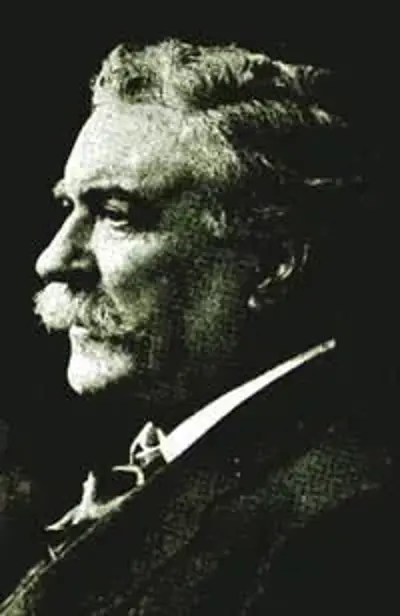
Ernest Belfort Bax was an English barrister, journalist, philosopher, men's rights advocate, socialist, and historian.
