Pankaj Mishra Quotes
No Muslim country has ever done as much as Turkey to make itself over in the image of a European nation-state; the country's westernised elite brutally imposed secularism, among other things, on its devout population of peasants.
Mishra, Pankaj. From the Ruins of Empire: The Intellectuals Who Remade Asia. Farrar, Straus and Giroux, 2012.

This quotation illustrated the extreme polarization between the current fundamentalist Muslims, and the Muslim modernists and the West. Kamal Ataturk, the great leader and stateman who is the father of modern Turkey, is castigated by the author for leading the new Turkish parliament to depose the Caliph – the civil and religious autocrat, one of whom reigned from after the death of Muhammad till his abolishment in 1924. Most of the rest of the world credits Ataturk with being one of the great leaders of all time—one who led a democratic revolution which transformed Turkey into the only Muslim secular democracy, requiring pubic secular European type education for all children, giving women the right to vote (before the U. S. even), adopting a European alphabet and dress, and outlook on life—creating most remarkably a total cultural revolution with virtually no loss of life. No revolutionary leader, before or since has led so extensive a political and cultural revolution, and it was a bloodless revolution. Turkey, into the 21st century, was by far the most powerful, industrialized, scientific and modern nation of Muslims in the world and others were far behind. Yet many Islamic theologian still castigate Atatork for his great achievements as being against the will of God.


He insisted that Turks wear hats rather than the class-specific traditional headwear. Some Turks preferred the word “modernized” to “civilized.”
At the time, Muslim clerics had a great deal of influence and in many cases legal control over all facets of Turkish society much as exists in other Islamic societies today. They even controlled what was taught in the schools. Remarkably, without bloodshed, Ataturk broke both the power and the influence of the clerics on all official and public activities. Many Turkish Muslims even developed a type of reformed Islam with the relationship between the individual and the clerics one of parity much like Protestant churches in the West. At the same time there was a more orthodox part of the population and while they sent their children to religious schools, they also attended public schools so even the orthodox Muslims in Turkey learned science and modern subjects which are still not taught in most Islamic schools and madrassas.
In 1925 his administration had passed a law banning the wearing of the traditional Muslim hat.


Turkey had become a modern, secular nation under the leadership of Ataturk. At the time of this interview, a religious party had won a plurality of seats in the Parliament and while not rolling back the secular nature of the Turkish state which is enshrined in the Turkish Constitution, has tried to stem the tide of secularism.

Ataturk wrote this manual personally. Religious Turks took violent offense to Ataturk’s proclamation that Turks were great without Islam.
Islam prohibits drinking alcohol. Ataturk was the first Muslim politician not only to drink alcohol, but to do so publicly and make a public toast. Unfortunately he became addicted and died early as a result of his alcoholism. Ironically, to this day, he is used by Turks and other Muslims both as an example of the right to drink alcohol and also by those who appreciate the wisdom of Muhammad in banning alcohol.
The palace, which had belonged to the Ottoman Caliphs, who were called “Shadows of Allah on Earth”.

The People’s Party that Ataturk formed is the oldest political party in Turkey.

presently in Israel. The document purports to represent the views of the Ottoman Sultan of the time. Napoleon Bonaparte had launched an invasion of the Middle East bring foreign troops and foreign new ideas. The Governor led military and propaganda opposition to the French and fortified Acre and withstood Napoleon’s siege of 1799.

Kamal Attaturk had radically reformed Turkey into a secular state with many modern European elements. To this day Turkey is the only predominantly Muslim populated state which is a modern, industrial democracy.

The Ataturk reforms modernized Turkey and turned it into the most modern and democratic of the Islamic countries. However, there were always forces and populist governments that tried to erode the Ataturk reforms—especially secularism.
Few non-Arab Muslims would publicly admit this historical truth, and at the time this view was shocking to the most religious men in Turkey. However it resonated with many of the average citizens. The entire Arab world had been subject to and controlled by Turkey, and amongst the Turks, the backward Arabs, were not very popular and were historically seen as underdeveloped colonial subjects.
The Jews and Arabs for years shared Palestine. But the Jews spread out over the world, becoming modern and Westernized in the process. When the Jews returned to Palestine as a part of the Zionist movement, they were more modern, Westernized, and culturally at odds with their old Arab cousins, whose cultures had atrophied. The Arabs resented the Westernized culture that was being introduced into the Middle East. One point of view is that had Israel not tried to introduce moderism and Western ideas into the Middle East, the Jewish State might have been more accepted. However, not only did they bring a foreign perspective (democracy), education and techmology and capitalism to the area, but they far outpassed the Arab nations in agriculture, industry, science, medicine and general standard of living. The Arab dictators and monarchs had always had the excuse for poverty that the land was so poor that it simply could not be developed, but Israel developed the worst of the land in the area with no oil or natural resources. Every day of Israeli prosperity and scientific achievement was an embarassment for the rest of the Middle East where even the rich oil countries were not improving the lot of the average citizen.

The Ottoman Turks had just conquered the city of Constantinople including the Eastern Roman Empire in their domain. They would be the dominant power in the area until the First World War when they made the mistake of siding with the Germans and the Ottoman Empire was broken up in the Treaty of Versailles.
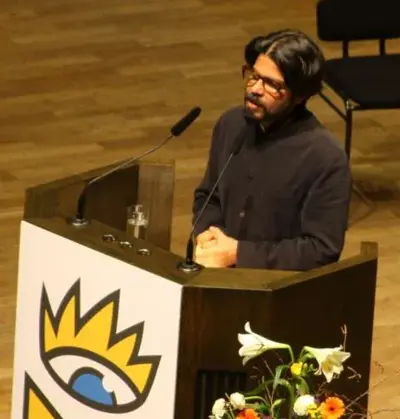
Pankaj Mishra is an Indian essayist and novelist and a recipient of the 2014 Windham–Campbell Prize for non-fiction.
