Livy Quotes
No law is quite appropriate for all.
Titus Livy, 59 BC-17 A.D. Roman Historian, Ab Urbe Condita, c. 28 BC
Sourced by: Eigen's Political and Historical Quotations


The address came to be known as the “Malaise Speech.” There was great negative reaction to the President’s being negative about America, even as many agreed with his assessment of the problem.


The bill fixed the “Sequester Problem” but for only 2 years at which point the Sequester becomes operational which most members thought was a bad outcome. The years was a compromise between those legislators who wanted the Sequester abolished completely and those who didn’t want to get rid of it at all as it imposed some fiscal discipline on Congress even of the outcome was irrational and destructive in some areas.

He was responding to Mississippi Congressman William Colmer-- {637395}. Southern racists frequently accused other members of Congress of being intimidated by civil rights leaders rather than voting for civil rights legislation out of conviction. Many of them, like Colmer, were so insular that revanchist that they did not realize that other whites could really believe that segregation was not a necessary and good thing.


The Social Security law, most American’s favorite government program, had just been passed that year, and like the Affordable Health Care Act in the Obama administration, the Republicans were rabidly opposed to the program, and there was none of the collaboration with an objective to perfect and improve the legislative language. And like “Obama Care” and most very large new government initiatives, there were many problems that became clear once the program was started. Amazingly President Roosevelt was the first to tell the public and the press that the Social Security program will have many problems, but what does not work can be replaced by something else and the program would be improved. This was part of FDR’s basic approach to the Presidency. (See {631419}.) No politician in modern times would be able to say that or anything like it, and Mrs. Roosevelt’s quotation here, which she wrote for the entire country to see, most politicians and political scientists would agree that she was exactly right about new legislative initiative.


The Czar, a total autocrat, was out of touch with most of the civilized world. Under much pressure from his advisors who realized that there was much unhappiness with an autocracy, the Czar made this reform which seemed a major concession and was very much welcomed by the people. However, it had relatively little practical effect. The Duma could not make laws, they could only ratify those made by the Czar and his ministers. However, few members of the Duma were willing to vote against a measure that the Czar wanted. It had no practical effect on improving the standard of living and the economic development of a backward empire.

This is particularly true with legislation that tries to govern people’s personal behavior. Prohibition, banning of contraception and abortion, restrictive limits on divorce, outlawing homosexual behavior, for example, had public support when they were passed. But societal attitudes changed and the laws were first ignored and violated and then repealed, amended or declared unconstitutional.


Commenting on the legal defense of executive actions by the Obama Administration and how it applies to contesting similar executive actions by Donald Trump…


The Governor was delivering the State of the State message to the legislature. He presented is school aid proposal and it was received with applause.


America’s first political economist


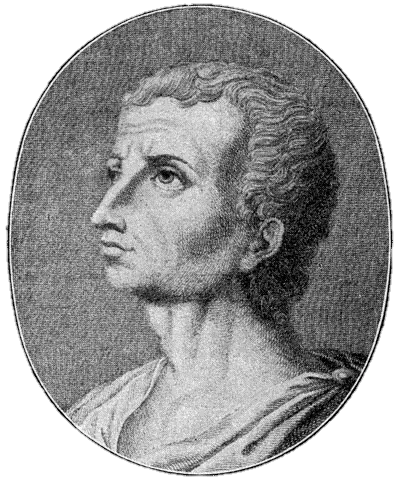
Titus Livius (/ˈlɪviəs/ LIV-ee-əs, Latin: [ˈtɪtʊs ˈliːwijʊs]; 64/59 BC – AD 12/17), known as Livy (/ˈlɪvi/ LIV-ee) in English, was a Roman historian. He wrote a monumental history of Rome and the Roman people, titled Ab Urbe Condita, ''From the Founding of the City'', covering the period from the earliest legends of Rome before the traditional foundation in 753 BC through the reign of Augustus in Livy's own lifetime. He was on familiar terms with members of the Julio-Claudian dynasty and even in friendship with Augustus, whose young grandnephew, the future emperor Claudius, he exhorted to take up the writing of history.
