James K. Polk Quotes
No Federalist over the age of 30 has ever changed his mind on anything
James K. Polk, 1795-1849, 11th President of the United States (Democrat), Diary
Sourced by: Eigen's Political and Historical Quotations

The Federalist party had evolved into the Whig Party, his opposition. However, Polk used “Federalist” to designate all conservatives, Whigs or the Federalists who were the precursor conservative party in America.


The Senator had switched parties.


In 1877 Wasburn was dropped from the List of Ministers by the Unitarian Church. He had become very critical of organized and orthodox religion of all kinds.

Even Washington, the least partisan of the Federalists, was not favorably disposed to the Jeffersonian Democrats. The Democratic Republicans as they called themselves were also equally hostile to the Federalists. So were most of the American people after John Adams’ presidency, and the people voted so heavily against America’s first political party and for the “Democrats”, that the Federalist party totally disbanded, “Blackamoor” is word for a Black person who is extremely dark—almost jet black in color. For many people today it is an impolite term to use,


The presidential nomination of William Jennings Bryan in 1896 split the Democratic party. Governor Hill was a strong party man, but couldn't abide Bryan's "free silver" and other positions, so when a reporter asked him if he was still a Democrat, and would campaign for Bryan, the governor answered:


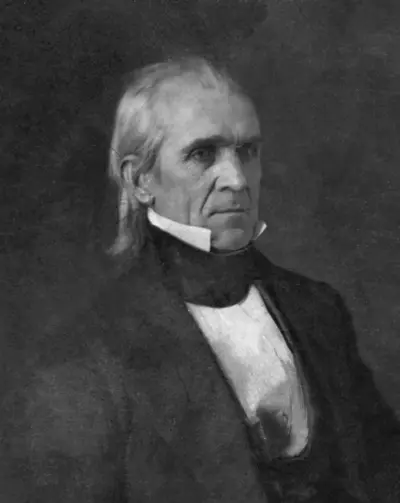
James Knox Polk was the 11th president of the United States, serving from 1845 to 1849. He previously was Speaker of the House of Representatives (1835–1839) and Governor of Tennessee (1839–1841). A protégé of Andrew Jackson, he was a member of the Democratic Party and an advocate of Jacksonian democracy. Polk is chiefly known for extending the territory of the United States through the Mexican–American War; during his presidency, the United States expanded significantly with the annexation of the Republic of Texas, the Oregon Territory, and the Mexican Cession following the American victory in the Mexican–American War.
