George Mason Quotes
No branch of government should ever be able to combine the power of the sword with the power of the purse.
George Mason, 1725-1792, Member, Virginia & Federal Constitutional Conventions, Quoted by Senator Sam Nunn, C-SPAN, September 14, 1990
Sourced by: Eigen's Political and Historical Quotations

Vidal, a staunch liberal held this view along with many ultra conservatives end extreme liberals. The constitution requires the Congress to declare war, but they have not done so for any of the wars since WWII. The President assumed the war power. And the only coherent budgets began.

When the Senate was debating the Gulf of Tonkin Resolution, which would empower the President to take "all necessary measures" to repel any armed attack on U. S. forces, Senator Morse was one of only two Senators opposing the resolution:


President George W. Bush had ordered NSA agents to bug the phones and email of American citizens who might have been talking with an overseas party or e-mailing them out of the country. The administration thought that American citizens might be part of terrorist sleeper cells or unwittingly were aiding terrorists. The law prohibited such activity—where American citizens were involved—without getting a court order. However, the President claimed that he had the inherent power as commander in chief of exempting the court requirement. Others maintained that even the President is not above the law. What was the big puzzle was that there was a secret court Congress had established just for such cases, but the administration instead decided to bypass the court.


The view that the Supreme Court was the final arbiter of constitutional controversies was not held in early America.

The Congress over the last century has ceded much of its Constitutional power to the President. Congress has much power to check the President, but just as Congress has not been very competent at legislating, oversight, and conducting hearings and investigations, it has not organized itself to use the powers it has very well.


Though not very dramatic or succinct, this is a very important quotation in American History. The original drafters of the Constitution concentrated on limiting the powers of the executive—the role of the King. But the Congress had no limits placed on them. In Britain, to this day, the Parliament can do whatever they wish as there is no restraint on them other than their prudence and reasonableness. Madison used the example of the Alien and Sedition Acts—huge infringements on the rights of Americans—to show why the legislative branch must also be more restrained and limited. And that was the logic behind adding the Bill of Rights to our Constitutions.

A veto power for the President would be absurd because

He was referring to a transportation bill that had been packed with earmarks and pork by his own party.


Alberto Gonzalez, White House Counsel and later Attorney General who was forced to resign and David S. Addington, Counsel to the Vice President, had come up with a novel view of the powers of the presidency. They argued that since the President is the Commander in Chief, in a war situation or intelligence gathering thereto, has the Constitutional responsibility for that function, he need not obey any laws of Congress as in the conduct of the war Congress would be impinging on the Constitutional separation of powers which itself was prohibited by the Constitution. The argument did not find any significant legal support but for a while the George W. Bush White House behaved as if this were the law, despite the fact that even in the American Revolution and the War of 1812 Congress passed laws regulating the conduct of the armed forces as is provided for in other parts of the Constitution. Yet even Goldsmith would allow the President some powers that many think are unconstitutional and/or belong to Congress. See {32436}.
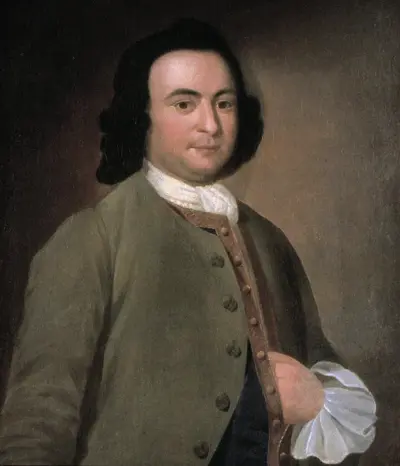
George Mason IV was an American planter, politician and delegate to the U.S. Constitutional Convention of 1787, one of three delegates who refused to sign the Constitution. His writings, including substantial portions of the Fairfax Resolves of 1774, the Virginia Declaration of Rights of 1776, and his Objections to this Constitution of Government (1787) opposing ratification, have exercised a significant influence on American political thought and events. The Virginia Declaration of Rights, which Mason principally authored, served as a basis for the United States Bill of Rights, a document of which he has been deemed a father.
