Indira Gandhi Quotes
My fiancé, you see, belonged to another religion. He was a Parsi. And this was something nobody could stand - all of India was against us. They wrote to Gandhi, to my fther, to me. Insults, death threats. Every day the postman arrived with an enormous sack and dumped the letters on the floor. We even stopped reading them; we let a couple of friends read them and tell us what was in them.
Fallaci, Oriana. Interview with History. Translated by John Shepley, Houghton Mifflin, 1976, p. 167.

This Sura of the Koran warns the faithful that the non-Muslims of the world have as a major objective the Conversion of Muslims. While this was and has been the case in times past starting even before the Crusades, many Christians felt it as an obligation to either convert the Muslims or to kill them. In modern times there have been Christian missionaries who have had an objective of converting Muslims, but no Christian government has had that as a policy for a long time now. But most Muslims are told this is so today and the Koran warned of this. The result is that many Muslims—particularly those who have not had much contact with other religions—believe that because of this, they will be forever fighting heretics like Christians. For this reason, Islam’s future is under attack.

The Muslim League was demanding that the Punjab become a part of Pakistan when independence was granted later. However, the Hindus, Sikhs, Buddhists, and Christians were all adamant that they would not live in a Muslim nation which would soon become a de facto theocracy if the British could not control them. The Punjab was divided between India and Pakistan, and hundreds of thousands died in Sikh-Muslim attacks and then Hindu-Muslim conflict in the Punjab.


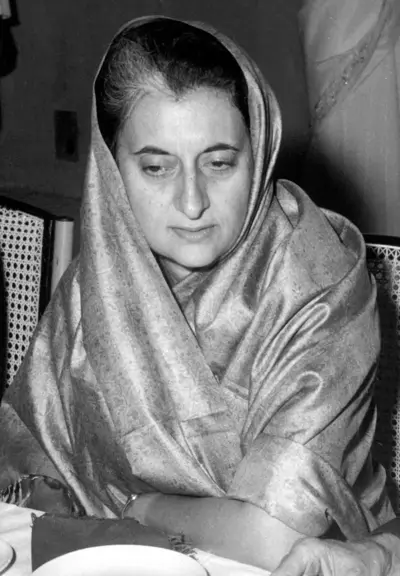
Indira Priyadarshini Gandhi was an Indian politician and a central figure of the Indian National Congress. She was the first and, to date, only female Prime Minister of India. Indira Gandhi was the daughter of Jawaharlal Nehru, the first prime minister of India. She served as prime minister from January 1966 to March 1977 and again from January 1980 until her assassination in October 1984, making her the second longest-serving Indian prime minister after her father.
