Hirohito Quotes
My duty is to pass this nation, which I inherited from my ancestors, on to future generations. Abiding by what Emperor Meiji preached, I will bear the hardships and carry out my duties and be loyal to the nation. After giving considerable thought to this matter, I am determined to devote myself to rebuilding the nation, while bearing the hardships. What would happen if I abdicated? People would ask why I abdicated. In that case, there would be turmoil.
Hirohito, 1901-1990, Emperor of Japan, Quoted in Diary of Grand Chamberlain Yoshihiro Tokugawa
Sourced by: Eigen's Political and Historical Quotations

At that point the Japanese were losing the war on every front. It is not clear whether Hirohito would actually have done such and not tried to escape in the end, however he certainly expected his subjects, military and civilian to do so. That expectation and the behavior of the Japanese troops fighting to the death on many islands was a powerful factor in leading Truman, Marshall and other key American leaders to use the Atomic Bomb. See Marshall: {641063}


Even some who bought the party line that the Emperor had personally not started the war or the other incursions, blamed the Emperor for his inaction.

This testimony turned out to be a tactical error. The main purpose of Tojo was to protect Emperor Hirohito from responsibility for the war. See {587277}. But by admitting that he never disobeyed even the Emperor’s wishes, he made it clear that he had implemented the Emperor’s desired policies. Therefore, Hirohito must have been responsible. After this testimony there was some delay and he changed his testimony claiming that once he disobeyed the Emperor when he took the nation to war. Few believed this second version, but it was sufficient to keep Hirohito from being charged—which despite many calls for his trial, General MacArthur also did not want the Emperor brought to account as the institution was making the occupation of Japan very easy.
Other war criminals had committed suicide in conformity with the Japanese custom. But Tojo stayed alive so that he could take the responsibility from the Emperor Herohito who many Americans wanted tried for his actions and inactions during the war. But Tojo made an error. At the beginning of his trial he testified that he always obeyed the Emperor even though he was the Prime Minister and the head of government. Therefore, the Emperor was guilty of those crimes he had discussed with Tojo and the cabinet. Later, he was persuaded to change his testimony and said that he led the country to war and the Emperor wanted peace, a statement that few believed. See {587278}. While the Emperor had committed war crimes General MacArthur believed that the Emperor left in place and unpunished would make it easier to govern Japan, than if he were tried and punished. However, he and his staff fabricated a report to exonerate the Emperor rather than make his recommendation to his superiors and the President so they could either accept his view or not. He was a unilateralist in the administrative sense of the word. See {587279} for additional material on the Emperor’s guilt.


none of a prosecutorial nature At the end of World War II, a major issue was whether to try the Japanese Emperor as a War Criminal. He had been the Commander and Chief of the Japanese Armed Forces, personally appointed virtually every military of civilian official of consequence—who served at his pleasure, had personally approved every major Japanese invasion (except some of the China incursions) and attack (including Pearl Harbor), personally allowed the execution of American captured prisoner of war flyers from the Doolittle raid on Tokyo, and was knowledgeable about most of the Japanese war crimes. However, General MacArthur thought him a stabilizing force in post-war Japan and never did a detailed investigation of his possible indictment. Instead he wrote this magnificently artfully worded telegram to General Eisenhower. MacArthur wanted to shock the Truman administration into allowing him to reduce the Emperor’s dictatorial powers but retain not only the monarchy but avoid indicting Hirohito. He succeeded, and there was no serious investigation of the Emperor as a possible war criminal despite many calls for Hirohito’s indictment from a few allied politicians {43748} and some American and allied veterans groups. Few could argue with the pragmatic result and the rehabilitation of Japan, but the justice of the decision—or lack thereof—has been debated since. See {43823}, {43824}, {603499}, {43831}, {603752}, {43841}, {601309}, {593777}, {43997}, {43999}, {594634}


Although Emperor Hirohito had the status of a God, and his Prime Minister and Chief of the Military testified that they had never disobeyed the Emperor {587278}, there was a thorough attempt to whitewash the Emperor’s role—{587279}. Few Japanese, even years later would suggest that Hirohito might bear some personal responsibility. The Mayor was one of the few who made the statement of the obvious. He received 181 death threats and he was shot shortly thereafter by a right wing supporter of the Emperor’s.


This was hand written the day before D-Day by Eisenhower. It was to be issued in the event of a failure of operation Overlord—the D-Day landings. The success was by no means a sure thing and the greatness of Eisenhower is indicated by the fact that he was not arrogant, kept the possibility of failure in mind, and took it upon himself to accept the responsibility of things had not gone well. This was one of the greatest quotations that was never made.


The Emperor had made his brother King of Holland to function as a French military Governor. But Louis Napoleon. Who took an oath as the King of Holland, took his oath and responsibilities seriously and tried to serve Dutch interests which his brother cared for not at all. Louis Napoleon had an impossible situation with dual loyalty that was incompatible.


He always appeared in a military uniform after that.


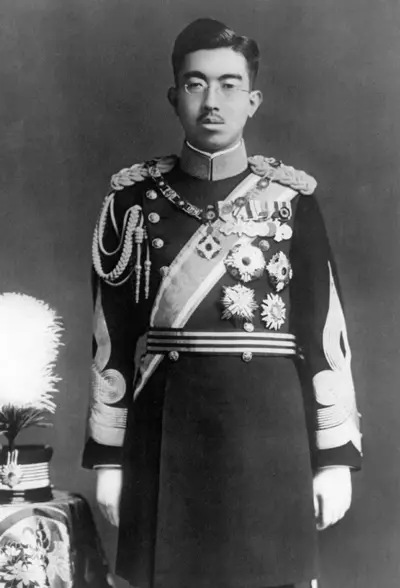
Emperor Shōwa, better known in English by his personal name Hirohito (裕仁), was the 124th emperor of Japan according to the traditional order of succession, ruling over the Empire of Japan from 25 December 1926 until 2 May 1947, after which he was Emperor of the state of Japan until his death. He was succeeded by his fifth child and eldest son, Akihito. Hirohito and his wife, Empress Kōjun, had seven children, two sons and five daughters. By 1979, Hirohito was the only monarch in the world with the title "emperor." Hirohito was the longest-lived and longest-reigning historical Japanese emperor and one of the longest-reigning monarchs in the world.
