Heather Cox Richardson Quotes
Men like Abraham Lincoln recognized that if the slaveholders were not stopped, it would only be a question of time until they spread their system of elite rule to the entire country. Poor men would be bound for life into menial labor, and American democracy would die.
Richardson, Heather Cox. How the South Won the Civil War: Oligarchy, Democracy, and the Continuing Fight for the Soul of America. Oxford University Press, 2020.

The general issued a military order emancipating slaves in Florida, Georgia and South Carolina. President Abraham Lincoln rescinded the order feeling it was too premature and it would cause the slave states that stayed in the Union--Delaware, Maryland, and Kentucky--to go over to the Confederates.

Fremont and some of the Radical Republicans wanted Lincoln immediately to declare the slaves of the rebelling states free. As a major general in charge of an area, he wrote a military order emancipating all the slaves in his jurisdiction. President Lincoln countermanded the order as soon as he found out. He wanted Fremont to only free the slaves whose owners were actively working against the union. Lincoln needed to hold the border states like Maryland in the Union and was working on a plan whereby slave owners who were loyal to the Union would be economically compensated when their slaves were freed. If loyal slaveholders in Fremont’s area would lose their slaves with no compensation, Lincoln feared that the otherwise loyal border states would be driven to the confederacy thus shifting the balance of power. Lincoln had his own plan for emancipation and would not allow Fremont to alter that. As a result of this speech, the Radical Republicans nominated Fremont to run against Lincoln. For a few weeks he looked like he would run, but then he and Lincoln made a deal. Lincoln fired Montgomery Blair, Fremont’s arch enemy, from the cabinet, and Fremont withdrew from the election.

Marx followed the American Civil War very closely. The freeing of the slaves caused an immediate social, moral and economic revolution, the results of which we live with today.

In the Civil War a drafted conscript could pay money instead of serving in the army. Many rich and middle class men did so leaving a higher proportion of the poor to be drafted. The song is sometimes misattributed to William Cullen Bryant.


This was not an original notion with Abraham Lincoln. Seward and most of the “Radical Republicans” believed that the slavery issue had to be resolved and attempts to compromise were futile.

This Civil War recruiting poster was described by the Free Library of Philadelphia as “Civil War recruitment print targeting African Americans by evoking the freedoms granted by the Emancipation Proclamation. Depicts a montage of symbolic scenes centered around an African American Union soldier triumphantly holding up a sword and an American flag with the banner "Freedom to the Slave." He stands near broken shackles upon a tri-color flag adorned with a coiled snake. The flag is tugged upon by one of three joyous slaves freed by an African American soldier. Other scenes depict an African American man reading a newspaper on a rocking chair near a plow and child, African American children entering a "Public School" near a church, and a regiment of "U.S. Colored Troops" marching across a battlefield strewn with dead bodies.”
Samuel Colt, 1814–1862, was the inventor and manufacturer of the six gun which was available for about half a cowboy’s monthly wage ($17) and, in effect, put all men on an equal footing in individual conflicts.


Jamaica, then part of the British Empire which had outlawed slavery, was quite racially integrated with negroes and mulattos in civil positions such as magistrate. When the ship landed, the slave, John Anderson, was kept locked below deck since if he ran off and reached shore, the Jamaican authorities would have declared him a free man. The presence of the captive negro slave leaked out and a group of Jamaicans boarded the ship uninvited and forcibly removed Anderson, He was taken before a Jamaican magistrate who declared him a free person. The ship’s captain demanded that the authorities return the American private property which had been stolen from an American ship by a “mob”. Harrison, the US Counsel complained to the Jamaican Governor of the “Insult” to the American Flag that had taken place and demanded redress. In both efforts, the original decision of the magistrate was supported and Anderson was a free man. Harrison, an ardent Southerner from Virginia was apoplectic and asked the State Department to make this case a major issue in relations with London. His description of the public opinion then in Jamaica was classic. His racial bias was even supplemented by a virulent anti-Semitism because not only had Jewish Jamaican merchants supported abolition of slavery but some had intermarried with Negroes who had converted to Judaism.
This letter was signed by a local white Priest and two other leading planters. This quotation gives us a marvelous feeling for what occurred when parts of the South was occupied by the Union Army shortly after the Emancipation Proclamation was issued. Minor and his fellows just did not “get it.” The concept of freedom of the slaves was intellectually so foreign to them, that they wanted the Union Army to “compel” the freed slaves to work. They were horrified that slaves went wherever they wanted, and they were most outraged when former slaves who had enlisted in the Army, would “visit” their old plantation setting such a terrible example. The letter gives us a perspective on how difficult it was to change the mental set of Southern Whites and why Reconstruction was so difficult. The year of the letter is somewhat uncertain as the original letter appears to be dated 1862 but the writing is not clear and that date does not comport with the history of the era and we believe 1863 was the correct year. The photograph is of the first official colored troops mustered into the Union Army. They were called the Louisiana Native Guards and contained the ex slaves who went over to the Union side just before the time this slave owner complained. These ex slaves, in uniform, and with arms would sometimes visit the plantations where they and been enslaved, thrilling the remaining slaves and infuriating owners like Minor.


The Czar of Russia was often referred to as “The Autocrat of all the Russians” He was the most entrenched and powerful monarch in the world with absolutely no possibility of his giving up his crown and power. That was the analogy that Lincoln used here to express his pessimistic view that the Southern slave owners would never voluntarily give up their slaves. He was right of course in both cases. Force during and after the Civil War freed the slaves, and the 1917 Russian Revolution ended the Czar’s reign.

This quotation is historically important because Davis clearly states the reason for the rebellion of the South. The anti-slave states were growing at a greater rate than the slave states and despite the greater voting power that a southerner had (a result of the 3/5 count of slaves for census purposes, and the Senate), the handwriting was on the wall and the majority of the United States was against the vicious institution of slavery and would make it unprofitable, impossible and/or illegal in the coming years. Southern slavery advocates saw this as a “tyranny of the majority” and therefore took up arms. In the early 20th century, apologists for the Southern rebellion tried to promote the idea that there were reasons other than slavery, but this quotation and the resolutions of the states who withdrew from the Union make it clear that the right to maintain slavery was the only significant issue. In that sense it was a States’ Rights issue, but the South was opposed to States’ Rights when it came to States refusing to return fugitive slaves when Federal Law required such under the Dred Scott Supreme Court Decision.

In 1848 a pro-slavery mob in Washington DC Gamaliel Bailey's anti-slavery publication, The National Era, which soon thereafter was the publisher of the serialized Uncle Tom's Cabin. Hale introduced a bill in the Senate outlawing rioting in the District of Columbia. The Southern Senators objected violently and this served as a catalyst for the for the most extensive public debate that had ever been held on the slavery issue. Hale probably intended this. He was the first public anti-slavery Senator.

The cause of the Civil War was slavery. When the Souh fired on the nation’s army and governmental personal, the secession became treason. So Slavery was the cause of the treason. Douglass argued that if we eliminate slavery, we eliminate the cause of the Treason.


At this point, there had hardly been any fighting and no outrages or war crimes were yet committed by either side. These would come later—more on the Confederate side as they did not want to take the limited resources they had from their troops to fulfil abstract obligations to prisoners of war or to civilians. A few deliberately chose to use terror tactics. The Union troops also at various points in the war got out of hand and looted personal property of civilians. But at this point, this proclamation was just lies and propaganda.

De Tocqueville was generally concerned about what he saw as an inherent conflict between freedom and equality. Efforts to produce equality can lead in some cases to impingements on some freedoms or rights. Unlimited free rights can produce inequality and a de facto autocracy. Even in modern times America is struggling to find a proper balance.


This is one of the more passionate and colorful descriptions of Conservatives in the political literature. The conservative party were called Orangists as they were supporters of the monarchy of William V, Prince of Orange. As in modern times the conservatives included the upper classes, business people, religious advocates. The political conservatives were passionate, respected established authority, and in general, reactionary. The tended even then to flip-flopping as the conservatives had several factions--business conservatives, religious conservatives, monarchial conservatives, authoritarian conservatives and others. Depending on which faction was most powerful at the time, conservatives might advocate one position and change later when another faction was in control. Valckenaer also had some choice words to reflect his disdain for them. It is noteworthy that this description could describe political conservatives in almost any time period, in any culture. For example, it might have been a liberal writing about the Tea Party Republicans in 2014.
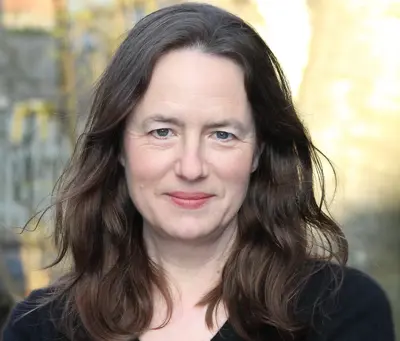
Heather Cox Richardson is an American historian and professor of history at Boston College, where she teaches courses on the American Civil War, the Reconstruction Era, the American West, and the Plains Indians. She previously taught history at MIT and the University of Massachusetts Amherst.
