Thucydides Quotes
Men do not rest content with parrying the attacks of a superior, but often strike the first blow to prevent the attack being made.
Thucydides, c. 460 BC -c. 400 BC, Ancient Greek Historian, History of the Peloponnesian War, Book 6
Sourced by: Eigen's Political and Historical Quotations


He was criticizing the George W. Bush administration for attacking Iraq, a country which had not attacked the United States or Americans abroad while America did not attack those terrorists and countries which had killed Americans. For example, Hezbollah which blew up the Marine Barracks in Lebanon and the naval ship Cole.

He was a strong believer in surprise attack and preemption.
He served Presidents Reagan, Clinton, and both Bushes


Announcing that U. S. naval forces would attack German war vessels that entered "American protected waters" despite our not being at war:


This quotation has significance for two reasons. First, Lodge was one of the leaders of the conservative isolationist wing of the Republican Party which generally only wanted to provide the military with weapons to defend the mainland. However, the technology of the airplane caused much rethinking. Americans had seen what German bombing had done to Spanish cities and Italian air power in Ethiopia. This followed by Germany bombing city after city throughout Europe. There were huge calls for antiaircraft guns to be placed around all American cities so that Americans might be defended from air attack. However, Lodge supported another strategy that was a first for America: retaliation. From this point forward, America would rely primarily on retaliation rather than massive defense until President Ronald Reagan proposed his ill-fated Star Wars defense scheme. The second significant factor is that the senator suggested preemption—the attack on a military air base is that threatens us. This appears to be another first.


Self Given Title. The governor distinguished between friendly Indians from others to the consternation of Bacon and his followers.

The highest court in New York. Kent did not originate this concept. He was stating an age old principle of law: Posse vicinum impediri, ne in suo solo, sine alia causa suaque evidenti utilitate, munimentum nobis propinquum extruat, aut aliud quid faciat, unde justa formido periculi oriatur.
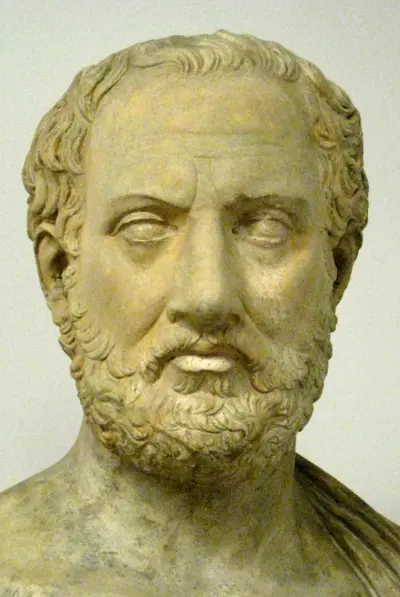
Thucydides (/θjuːˈsɪdɪdiːz/; Ancient Greek: Θουκυδίδης Thoukūdídēs [tʰuːkyːdídɛːs]; c. 460 – c. 400 BC) was an Athenian historian and general. His History of the Peloponnesian War recounts the fifth-century BC war between Sparta and Athens until the year 411 BC. Thucydides has been dubbed the father of "scientific history" by those who accept his claims to have applied strict standards of impartiality and evidence-gathering and analysis of cause and effect, without reference to intervention by the deities, as outlined in his introduction to his work.
