Timothy McVeigh Quotes
When an aggressor force continually launches attacks from a particular base of operations, it is sound military strategy to take the flight to the enemy.

He was a strong believer in surprise attack and preemption.


During his revolutionary battles in Kaingsi, Mao reduced his theory of guerrilla tactics to a poem:

This seemingly prosaic quotation is one of the most significant quotations in history. At the outbreak of the Civil War, the telegraph was rapidly developing as a communications technology. One of Lincoln’s greatest achievements was the appreciation of the new technology and the deployment of it to gain an immense strategic advantage which was a major factor in all warfare thereafter. Lincoln placed ALL telegraphy of the North under the control of the military. He then had a telegraph terminal installed in the War Department right next to the White House. He would spend many hours in the Telegraph Room reading dispatches as they were coming in. To the distress of some of his military commanders, the Commander in Chief actually, for the first time in history, received virtually real time intelligence about a battle, and issued orders to the commanders in the field in real time. The quotation is one of the early examples. Ironically, Lincoln had more real time battlefields information in the Civil War than most of our Presidents did until the Vietnam War when digital, radio communications were exploited for the purpose.


He was criticizing the George W. Bush administration for attacking Iraq, a country which had not attacked the United States or Americans abroad while America did not attack those terrorists and countries which had killed Americans. For example, Hezbollah which blew up the Marine Barracks in Lebanon and the naval ship Cole.
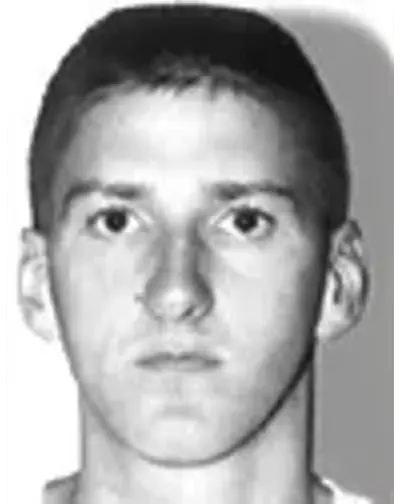
Timothy James McVeigh was an American domestic terrorist who carried out the 1995 Oklahoma City bombing that killed 168 people and injured more than 680 others, and destroyed one third of the Alfred P. Murrah Federal Building. The bombing was the deadliest act of terrorism in the United States prior to the September 11 attacks. It remains one of the deadliest acts of domestic terrorism in U.S. history.
