John Bigelow Quotes
Of your own indefatigable labor from early dawn and of your explicit instructions, that the batteries should reserve their ammunition, until the grand charge should commence, for which the enemy were undoubtedly preparing.
Bigelow, John. The Peach Orchard, Gettysburg, July 2, 1863. Kimball-Storer Co., 1910.


This seemingly prosaic quotation is one of the most significant quotations in history. At the outbreak of the Civil War, the telegraph was rapidly developing as a communications technology. One of Lincoln’s greatest achievements was the appreciation of the new technology and the deployment of it to gain an immense strategic advantage which was a major factor in all warfare thereafter. Lincoln placed ALL telegraphy of the North under the control of the military. He then had a telegraph terminal installed in the War Department right next to the White House. He would spend many hours in the Telegraph Room reading dispatches as they were coming in. To the distress of some of his military commanders, the Commander in Chief actually, for the first time in history, received virtually real time intelligence about a battle, and issued orders to the commanders in the field in real time. The quotation is one of the early examples. Ironically, Lincoln had more real time battlefields information in the Civil War than most of our Presidents did until the Vietnam War when digital, radio communications were exploited for the purpose.

Referring to Lincoln's Secretary of War, Edwin M. Stanton, who was a forceful administrator constantly telling all others what to do:


He had wanted more troops for the Afghan War than President Obama would approve. The Republican members of the Congress tried to make the difference a major issue of a President not supporting his commanders. The General made this brilliant response.


Candidates are always being asked in the middle of campaigns what they will do if they are defeated.


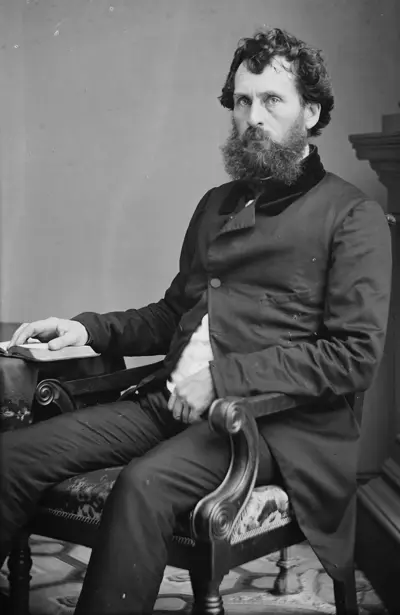
John Bigelow Sr. was an American lawyer, statesman and a historian who edited the complete works of Benjamin Franklin.
