Samuel Sewall Quotes
Meeting with ye Sachem [the tribal leaders] they came to an agreement and buried two Axes in ye Ground; which ceremony to them is more significant & binding than all Articles of Peace the Hatchet being a principal weapon with them
This is the origin of the phrase “bury the hatchet”.
Samuel Sewall, 1652 –1730, Chief Justice of the Massachusetts Colony, The New England Historical & Genealogical Register, Entry for 1680
Sourced by: Eigen's Political and Historical Quotations


1st Earl of Beaconsfield. Contrast this statement with that of Neville Chamberlain returning from Munich in 1941. Disraeli had threatened war and forced the Russians to accept all the British demands by diplomatically isolating them first and moving armed troops into position just before the peace conference.

Chivington led troops to attack hostile Indians. When they arrived at Sand Creek, the most militant young Indian men had left. The others did not want to fight, displayed white flags and wanted to negotiate. Chivington made his famous statement, attacked the Indians and massacred most of them including the ones who were trying to surrender with white flags. See {597566}.

Vladimir Lenin

Had he signed such a treaty in 1968, he would have been pilloried by the Conservatives of both parties for selling out the interests and principles of the United States and shackling the military before they could win the war. The military was lying about their successes and there were very few. Further, our ally whose government we were protecting from armed revolution was totally corrupt and did not support freedom and democratic values much more than the North Vietnamese Communists did. The Vietnamese in the South had little to fight for unless they were proofing from the corrupt government. There was no possibility that American could have won the war under those conditions. When the Nixon Administration signed the treaty, some of the ultra conservatives objected, but Nixon was a Republican anti-Communist and red baiter and this blunted the opposition of the bulk of the conservatives who were seeing a more realistic view of the war. The liberals who hated Nixon, however, supported him on this matter which was then their most important issue.

The Palestinians were split between supporters of Hamas and Fatah. The former was a terrorist organization which refused to recognize the right of Israel to exist and whose charter called for the killing of all Jews. The latter, accepted the right of Israel to exist and was committed to peace and coexistence with the Jewish state. They had fought a civil war and Hamas controlled Gaza with well over 1 million people which they seized for force and killed of forced out Fatah Representatives. Fatah was the elected ruling party of the West Bank, the larger and more populous of the Palestinian territories. There was little chance of any peace given that split. However, Israel which had undergone over 7000 rockets fired upon them by Hamas, stated that they refused to negotiate with the Palestinians as long as the Hamas terrorists were a part of the control of the potential Palestinian state. They would only discuss a 2 state solution if Hamas agreed that they accepted the right of Israel to exist in their general territory as a Jewish State, Hamas would accept and follow previous agreements made with the Palestinians, and Hamas would give up terrorism and the objective of killing Jews. So either Hamas would have to change its policies or Israel would negotiate with an organization that claimed it would never accept the existence of that country as a Jewish state. Al-Masri thought that the agreement he had mediated, was a necessary first step and was constructive for all the parties.

Shlomo ben Yitzchak


The quotation was made in the context of the Arab Israeli conflict, but the principle is general.

This was part of the negotiation of a peace treaty with the Barbary States. The Barbary Pirates had an incredible extortion racket going in the Mediterranean. If nations would pay them an annual sum each year, they would not attack and seize merchant ships of that country and sell the ships and goods while holding the sailors for ransom. Military action on land and sea by American marines and naval ships had caused much damage and intimidated the Barbary States somewhat. See {640870}

During the Seminole War, Ross, as a very respected Cherokee Chief and leader, had been asked to persuade some if the Seminole Chief’s to come to a conference to discuss and negotiate a settlement to the conflict. Ross was successful . Seminole Chief Micanopy, twelve other chieftains, and a number of Seminole warriors accompanied the Cherokee deputation to the headquarters of the United States Army at Fort Mellon, where they were to discuss the matter. When they arrived General Thomas Jesup arrested the Seminoles instead of negotiating. Ross, a very educated man who was literate in English, o the Secretary of War. Jesup in retrospect was one of the disgraces in the history of the U. S. Army was admired, not for his fighting or his lack of ethics, but for his management and logistics as the Quartermaster General. For more quotations showing Jesup’s character, see quotations 643611 and 643612.

President Lincoln and Several of the Commanding Union Generals had declared that black slaves were free during the midst of the Civil War under the legal theory that if the slaves were property of the rebels, then they cold be seized as “contraband” and removed from the control of those who had committed treason. The question was, what would happen to those now free Negroes after the war? Many Negro leaders were anxious that if there were surrender, then the status quo ante might prevail and the Negroes—many have who had fought for the Union might be returned to slavery. This speech by the Secretary of State alarmed them further. This is why the Emancipation Proclamation was so important and even that might have been overturned by a subsequent President. This is why Lincoln, the white radical Republicans and the Black leadership placed so much emphasis on passing the 13th Amendment.


Marquis de Seignelay. This shows that the concept of ethnic cleansing has been around for some time. The only thing that prevented the French from implementing the plan was that they couldn’t defeat the Iroquois. There is a certain irony here in that the Iroquois were very much allied with the British even during the American Revolution. After that war, the Iroquois were run out of their traditional lands, not by the French but by the Americans. And where did they go and resettle? Up to then British Canada, the very area where the French so feared them.

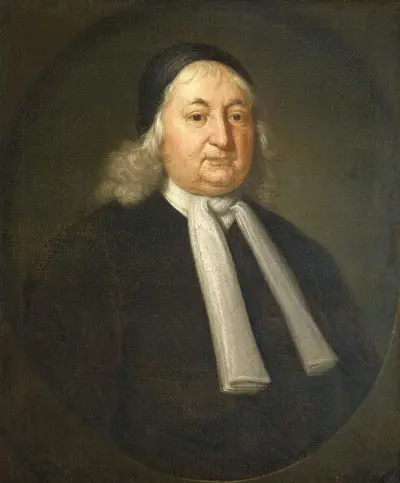
Samuel Sewall was a judge, businessman, and printer in the Province of Massachusetts Bay, best known for his involvement in the Salem witch trials, for which he later apologized, and his essay The Selling of Joseph (1700), which criticized slavery. He served for many years as the chief justice of the Massachusetts Superior Court of Judicature, the province's high court.
