John M. Chivington Quotes
I am not authorized to make peace.
Chivington led troops to attack hostile Indians. When they arrived at Sand Creek, the most militant young Indian men had left. The others did not want to fight, displayed white flags and wanted to negotiate. Chivington made his famous statement, attacked the Indians and massacred most of them including the ones who were trying to surrender with white flags. See {597566}.
John M. Chivington, 1821-1894, Protestant Clergyman and Colonel of the Colorado Volunteer Militia, Statement to William Brent
Sourced by: Eigen's Political and Historical Quotations

The officer who testified at the inquiry of the Sand Creek Massacre, Lieutenant Joseph Cramer, was murdered thereafter in Denver by a supporter of Chivington’s. Sand Creek’s Indians were mutilated even after death with breasts and scrotums cut off as souvenir tobacco pouches. Ironically, President Lincoln had med with some of the killed Cheyenne leaders at the White House the year before and his quotation presages those whites who would break treaty.

1st Earl of Beaconsfield. Contrast this statement with that of Neville Chamberlain returning from Munich in 1941. Disraeli had threatened war and forced the Russians to accept all the British demands by diplomatically isolating them first and moving armed troops into position just before the peace conference.


During the Seminole War, Ross, as a very respected Cherokee Chief and leader, had been asked to persuade some if the Seminole Chief’s to come to a conference to discuss and negotiate a settlement to the conflict. Ross was successful . Seminole Chief Micanopy, twelve other chieftains, and a number of Seminole warriors accompanied the Cherokee deputation to the headquarters of the United States Army at Fort Mellon, where they were to discuss the matter. When they arrived General Thomas Jesup arrested the Seminoles instead of negotiating. Ross, a very educated man who was literate in English, o the Secretary of War. Jesup in retrospect was one of the disgraces in the history of the U. S. Army was admired, not for his fighting or his lack of ethics, but for his management and logistics as the Quartermaster General. For more quotations showing Jesup’s character, see quotations 643611 and 643612.


Originally published as The Cynic’s Word Book

Santa Ana was, at the time, a captive of Sam Houston.

Although Great Britain had abolished slavery, British economic interests during the Civil War suffered because of the northern blockade of the South. Much political opinion in England was hostile to the blockade policies of the Union. Bright, a great admirer and supporter of the United Sates and the Union cause was concerned that the United States might drift into War with Great Britain. His letter to Senator Sumner was written with the understanding that it would be in shared with President Lincoln, and it was actually read at a cabinet meeting.


Lee was trying to negotiate a peace treaty as a part of his his potential surrender. However, Grant would not be drawn into that, Lee was NOT the government of the Confederacy, and Grant had served with him earlier in the Mexican War and knew he was not a fanatic on teh subject of slavery and race as most of the Southern leaders were. They werenthe ones who would have to be captured or driven to surrender. Grant could have gotten authoirioty as he was in almost real time contact with President Lincoln by telegraph. However, neither wanted to negotiate peace with Lee. Instead, Grant gave Lee and his men incredibly gracious termsof surrender which he and Lincoln hoped would casue the avarage Southern soldiers to feel better about surrender for although Lee's was the largest Confederate Army, there were still others out there that had to be dealt with,


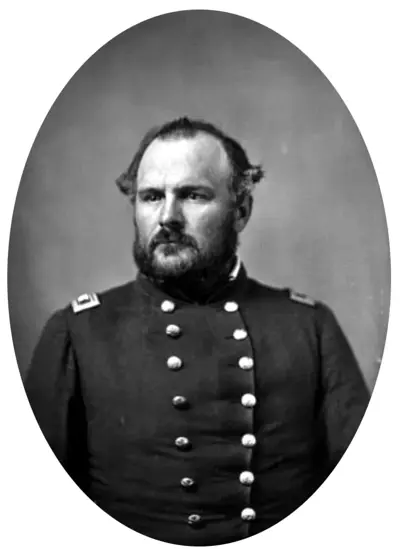
- Born: January 27, 1821
- Died: October 4, 1894
- Nationality:
- Profession:
John Milton Chivington was an accused war criminal, American Methodist pastor and Mason who served as a colonel in the United States Volunteers during the New Mexico Campaign of the American Civil War. He led a rear action against a Confederate supply train in the Battle of Glorieta Pass, and was then appointed a colonel of cavalry during the Colorado War.
