Al-Hakam I Quotes
Like the tailor who uses his needle to sew together pieces of cloth, so I use my sword to unite my divided provinces.
Al-Hakam’s reign was particularly bloody during which he beheaded thousands of dissidents. The son developed a nervous tic said to be the result of watching all the bloody executions.
al-Hakam I, ?-822, Moslem Ummayad Emir [Ruler] of al-Andalus [Spain], Statement to his son and successor, al-Rahman II
Sourced by: Eigen's Political and Historical Quotations

Just like Spain and Persia, the Arabs by fighting lost not only more land, but also lost the respect of most of the non-Muslim War. The conscious decision to choose an irrational strategy that would cause loss of life, land and respect has none-the-less repeatedly been chosen by the Arab culture. much to its detriment. Azzam is one of the few Arabs to admit this to the non-Islamic World.


Wilson was a descended from a line of fundamentalist Presbyterian Ministers who believed firmly that God ordained the Holy Land for the Jewish People. Even though the WWI peace was the main topic of the Versailles Treaty negotiations, because the Turks made the poor judgment to ally themselves with the Germans and the Ottoman Empire was to be broken up. There was much lobbying by Zionists of many countries and many Arab groups even then.


While it is true that thus far in human history war has been the only way, that does not necessarily mean that that is the only way. The establishment of free trade used to be only accomplished by force or arms or fear of such, but in modern times, common markets and trading zones are being created for economic and domestic desires for economic development. Even most non democratic countries have wanted to create a larger market for its goods and services and have joined larger organizations irrespective of military defeat and its fear. See {553984} for perspective and hope relating to this quotation.
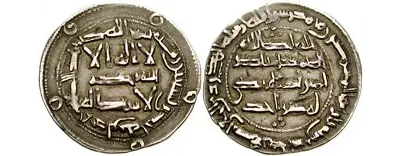
Al-Hakam Ibn Hisham Ibn Abd-ar-Rahman I (Arabic: الحکم بن هشام بن عبدالرحمن الداخل) was Umayyad Emir of Cordoba from 796 until 822 in Al-Andalus (Moorish Iberia).
