Henry Louis Gates Jr. Quotes
Like the amazing story of Anthony Johnson. This man was a slave, then became free, accumulated 250 acres, and even had his own slave, a black man who took him to court in Virginia in 1654.That man argued that he should be freed like an indentured servant. But Johnson, who we believe was a pure African from Angola, said, "No way, you're my slave." And the court agreed.
Gates, Henry Louis, Jr. The African Americans: Many Rivers to Cross. PBS, 2013.

In early New England the General Court served as both a legislature and a judiciary before separation of powers was introduced. 5 years later the Court banned importing African slaves at all. While slavery was not common in Rhode Island, the laws was not seriously enforced on those who would defy them. It does represent a public anti-slavery sentiment that existed in Early America. It would take 200 years for Rhode Island to finally eliminate all forms of slavery.

This law, reflecting the religious values of the Puritans, would form the basis and example of slavery prohibition in some of the other Northern States of Colonial America. They colony allowed indentured servitude, if voluntary, but required that even indentured servants have certain freedoms, and of course when the period of indenture was served, the servant was totally free.

depending on the term of the sentence Many criminals in England were sentenced to indentured servitude in America for a number of years depending on the crime.

The perception of the necessity of slavery was evident very early in the South.

He and other founders believed that Blacks freed from slavery would still suppress wages for whites and hurt industry. The possibility of intermarriage was also viewed as a moral degeneration. Approximately 15,000 Blacks chose to emigrate.

He was also himself a ship owner in the slave trade and he was the brother of the leading Rhode Island abolitionist, Moses Brown. See {585793}. Brown became the first American, prosecuted in federal court for illegal slave trading –-- a prosecution brought, in part, by his own brother. He was, however, acquitted.


In contrast to Massachusetts with had passed a law in 1641 banning slavery (Quote 643567), Maryland 22 years later became to first state to pass a law to formally recognize and allow Negro slavery.
Often referred to as “The Dean of Black Historians.”. Although critical of the behavior of Africans involvement in the slave trade, Person-Lynn maintains that there was a qualitative difference between African concepts of slavery where the enslavement was conceptually of human beings whereas the chattel slavery of the Atlantic trade considered the slaves as sub-human property. It is arguable as to which of the two views is the greater moral failure, but many regard it as a difference not worth much in that both views were grossly immoral and had devastating consequences for a large number of people.
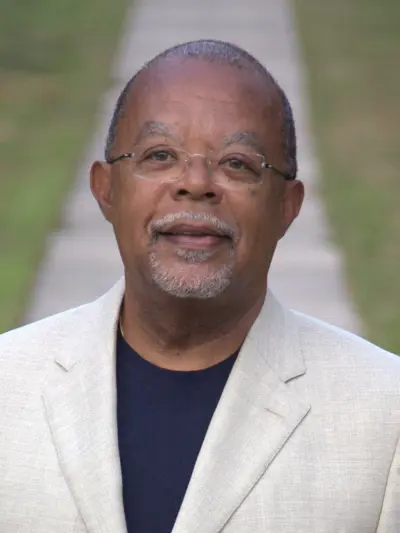
Henry Louis "Skip" Gates Jr. is an American literary critic, professor, historian, filmmaker, and public intellectual who serves as the Alphonse Fletcher University Professor and Director of the Hutchins Center for African and African American Research at Harvard University. He rediscovered the earliest African-American novels, long forgotten, and has published extensively on appreciating African-American literature as part of the Western canon.
