Will Rogers Quotes
Kid Congress and the Senate, don’t scold em. They are just children that’s never grown up. They don’t like to be corrected in company.
Will Rogers, 1879-1935, American cowboy, actor, and humorist, Advice sent to President-elect Franklin Delano Roosevelt (December 2, 1932
Sourced by: Eigen's Political and Historical Quotations

Lippmann was the leading political pundit of the time. He, like many others, totally underestimated Roosevelt whose easy-going manner, and non ideological style tended to put off ideologues and some intellectuals. See {609696}.

This is a wonderful historical picture of FDR on his campaign train. Note that the President liked to listen to ideas of many people. Unlike most Presidents he did not have any particular political programs that he advocated in his campaigning. He had no immediate answers to the Great Depression that he had inherited from the Hoover administration. But unlike Hoover, and most Presidents, he was willing to try ideas for which there was no advance evidence of success. If that did not help, he would try something else. He sought ideas from anyone and everyone. His enemies called him a weak leader who had no ideology—no principles but just trying unproven solutions to solve the nation’s critical problems. But it worked and he was elected 4 times—the only President who had served even 3 terms.


Mitchell was the first African American to be elected to the United States Congress as a Democrat. The few other Blacks were Republicans from the Reconstruction period after the Civil War. The President was FDR and Mitchell was elected in the midst of the Great Depression.

Personal attacks have been made in the Congress ever since that body first met. However, they were infrequent and raised concern when they were made. However, in the late 1980s, there was a series of personal attacks made across the political parties culminating in the resignation of Wright as the Speaker of the House. Some Republicans had objected to the failure to confirm John Tower as Defense Secretary because of his serious alcoholism problem which was made public, and in turn made public some of Wright’s indiscretions. From then on the personal invective and attacks increases and there was retaliation by both parties that went on for decades. At first it was exposures of real incidents but by the 21st century, the attacks were often fabricated. For example, Barack Obama was called a “Socialist Muslim” by Republicans. See {624107}


Pennsylvania Avenue which runs between the White House and the Capitol where Congress meets.


Champ Clark, the other Missouri Senator was a rabid isolationist and caused the administration much trouble. As a result the Roosevelt people paid a lot of attention to him and took Truman for granted. In particular, they did not give him the patronage in the state that he deserved using it instead to try and deal with Clark. Early reported the conversation to FDR who realizing their mistake invited Truman to the White House and patched things up. So FDR had personal experience with Truman and his candor and gumption. When the party leadership suggested Truman as FDR’s running mate, it was experiences like this which FDR weighed and agreed that Truman was a good man for the job.


The only soldier ever so honored. At the beginning of WWII, President Roosevelt and Churchill wanted the U. S. Army to invade German and Italian North Africa. Marshall, General Eisenhower, and all the other military men, advised that while it was possible, it would be a diversion from the strategic objective of invading Europe. None the less FDR ordered the invasion. The effect on the American people was wonderful, It showed that the Germans were not invincible, increased enlistment and morale at home, and developed more popular support for the war. Later, Marshall learned much about Democratic leadership and he, himself became a very effective government leader, and began to appreciate FDR’s approach but with a little cynicism about democracy.


President Trump did not personally believe in the tenets of White Supremacism, but a significant part of his political base did. His public approval in his first year in office was the lowest in history since such were measured, and he was desparate to hold on the the support of his base. So, unlike most Republicans who castigated and condemned White Supremacism and other hate groups, and the alt-Right, Trump not only remained silent, but actually tried to create a moral equivelence between some of the White Supremacists and some of the Left Wingers who were protesting the White Supremicists. Trump insisted that he did not condone or encourage hate groups or white supramacy advocates, but most of the public did, and, most importantly, they thougth that he did and gave him public credit for that as in this quotation. See {645359}.

While England was under attack by the Germans in World War II, Congress was debating Roosevelt's proposal for lend-lease. The president had set the passage of this legislation as his main priority, and a critical meeting between Churchill and Roosevelt was deferred until passage was obtained. Roosevelt dispatched Hopkins to London. Urging a prompt meeting, Hopkins cabled:

In many ways President Theodore Roosevelt was very boyish.


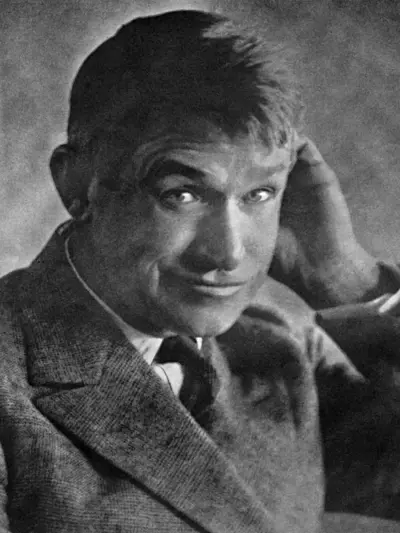
William Penn Adair Rogers was an American stage and film actor, vaudeville performer, cowboy, humorist, newspaper columnist, and social commentator from Oklahoma. He was a Cherokee citizen born in the Cherokee Nation, Indian Territory.
