John Buchanan Robinson Quotes
It was the king's army, the king's people, the king's taxes; and he who questioned the propriety of the royal prerogative of taking from his people without return or accounting, was reckoned, and felt himself to be, a criminal, guilty of the highest crime of disloyalty.

Sir Walter was imprisoned in the Tower of London for 13 years, during which time he turned to historical pursuits.

Many American colonists had relatives and friends in England, and Paine argued that American independence would help and not het the English people.


Note that the Queen always used the 3rd person rather than the 1st when referring to herself. This was true of most of the leading public figures in England at the time. Although she detested Gladstone, she gained control of her feelings and did her duty and “sent for” him to form the Government. She was personally delighted when, as she predicted, his government then had political difficulties.


If men's minds were as easily controlled as their tongues, every king would sit safely on his throne
Spinoza’s ideas were considered so radical and dangerous that he was the only man in history who was excommunicated by the Catholics, the Jews and the Muslims.

Prior to Cooke’s indictment of English King Charles I, there was a concept of Royal Impunity—that a sovereign could not legally be called to account for his actions as ruler of the state. The concept of “sovereign immunity” was a concept where the sovereign and his agents could be given immunity for specific actions, but they never would have impunity again where there were no limits to the crimes they might commit against their own people. Charles I refused to even recognize Cooke’s indictment and so have heads of state called to account for their major crimes since then all the way down to Saddam Hussein in 2006 who made the same argument. Cooke was himself hanged, drawn and quartered almost 20 years after the Charles I trial for his part in the “Regicide” so the concept of Royal Impunity did not die quickly.

Drake named the land Nova Albion.
Paine was describing the conquest of England in 1066 by William the Conqueror.

Typical of the times, the king was accountable to no one for anything. 200 years later, most of the world have accepted the principle that no one is above the law and that every leader is accountable to the people.

England had, under Henry VIII, left the Roman Catholic Church where the King replaced the Pope as head of the English Church. Henry’s successors then had to organize and manage the national Christian church. James was discussing the hierarchy of the Church of England and there was a suggestion that Bishops be eliminated and have every priest directly responsible to the crown. Bishops would be powerful figures who might form a power center. (They did later). However, King James I observed that the King is God’s choice and rules by divine right. So there had to be bishops to crown kings. The bishoprics were retained.


She was Queen of Scotland and claimed the English throne as well. While Elizabeth I was on the throne of England, Mary claimed that the court had no jurisdiction over an absolute monarch. Her son was in France at the time but eventually succeeded to the Scottish throne as James VI and the English throne as James I.


The revolution turned on many of its initiators including Vergniaud. He was guillotined along with other Girondists.
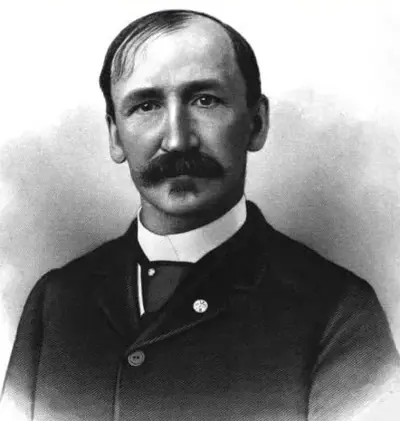
John Buchanan Robinson was an American politician from Pennsylvania who served as a Republican member of the Pennsylvania House of Representatives for Delaware County from 1884 to 1888, the Pennsylvania State Senate for the 9th district from 1889 to 1892 and the U.S. House of Representatives for Pennsylvania's 6th congressional district from 1891 to 1897.
