James Otis Quotes
It was once a fundamental maxim that every subject had the same right to his life, liberty, property, and the law that the King had to his crown; and 'tis yet, I venture to say, as much as a crown is worth, to deny the subject his law, which is his birthright.
He was considered Massachusetts’ greatest Colonial orator.
James Otis, 1725-1783, Attorney & Member of the Colonial Massachusetts legislature, Oration Against the Stamp Act Delivered Before the Governor and Council In Boston, December 20, 1765
Sourced by: Eigen's Political and Historical Quotations


This was written and adopted by Vermont a decade before the United States Constitution the ideas for which were in existence in America before the Constitutional Convention in Philadelphia.

See {587703} for a similar statement by a Supreme Court Justice.

In many countries, the king received all land and most property upon the death of a landowner.


Mackenzie was a British officer with whom Washington had become friends in the French & Indian War and in this letter, Washington was trying to explain the seriousness of the Boston rebellion for Britain.


It was drafted by John Adams. 9 Years later the French in their Revolution used the first clause in their Declaration of the Rights of Man and of the Citizen—See Quotation 602404 For an opposite point of view see Quotation 635927.


Hayward claimed that Wilson was the first American President who ever criticized the American Constitution. Many do not agree as Madison and Jefferson in part, along with most other Americans, found the Constitution so wanting that it was ratified only on condition of the passage of the Bill of Rights. Jackson, was distressed by the limitations on the President and many others had their objections, but Wilson, before he became a politician was a prominent academic political scientist and wrote voluminously and had an intellectual following so his criticism was not considered so “political” as others.


The call for individual liberty and the right of personal property by clergy is surprising to many. This Cahier was the consensus of the Clergy of Blois in 1789. There were cahiers of several provinces of France—some by the clergy, some by the nobles. What is fascinating is the emergence of many of the pre-Revolutionary French concepts. The example of the American revolution and its principles was known throughout the educated classes of France.


The preamble to this declaration of womens’ rights cleverly beginy s with the words of the Declaration of Independence with the single change that “all men” is replaced with “all men and women.” The message was clear. If the founders had a moral right and duty to revolt for these objectives women would be justified and duty bound to make similar efforts. That message terrified many men of the era.
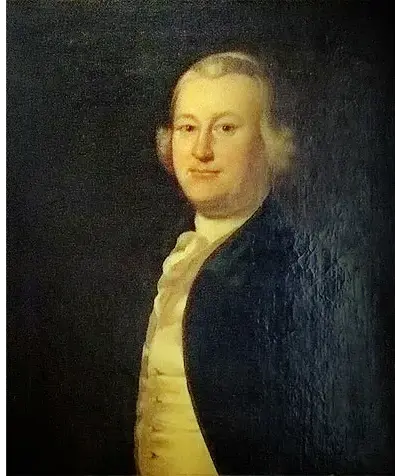
James Otis Jr. was an American lawyer, political activist, pamphleteer, and legislator in Boston, a member of the Massachusetts provincial assembly, and an early advocate of the Patriot views against the policy of Parliament which led to the American Revolution. His well-known catchphrase "Taxation without Representation is tyranny" became the basic Patriot position.
