Guido Calabresi Quotes
It seems another way that skills learned in law school can be used for less-than-admirable ends.
Commenting on the large number of lawyers going into lobbying:
Guido Calabresi, Dean, Yale Law School, Quoted in New York Times, December 29, 1989
Sourced by: Eigen's Political and Historical Quotations

He had not committed any felonies, but these charges were laid under the concept of “high crimes and misdemeanors”.

by the President and the White House Kennan was certainly right in Powell’s case. The President and Vice President—Bush and Cheney used Powell’s and the State Department’s credibility to have Powell tell the United Nations and the American Public that there was incontrovertible evidence that Iraq has a nuclear weapon about to be deployed thus justifying the American invasion of Iraq, However, this was untrue. Not only was there no nuclear bomb almost ready for deployment, there was no nuclear development program in Iraq at all.


In early 1933 President Hoover was a lame duck, but the country was in the midst of a banking panic in the Great Depression. Hoover tried to get President-elect Roosevelt to join him in some joint action, but Roosevelt didn't want to commit to anything in advance and preferred not to associate his administration with the banking debacle of the Hoover administration. He felt that the public was so soured on Hoover’s incompetence and lack of apparent empathy, that anything he did with Hoover would be perceived fas bad and doomed to failure. What Roosevelt wanted to do is diminish fear and despair and have new hope. However, Hoover was erroneously told by aids that Tugwell, a Roosevelt assistant, had suggested that Roosevelt should let the situation deteriorate, and then there would be more to blame on the Republicans when Roosevelt took office. Tugwell was as far from being a partisan politician as one could get. He was an academic with a PhD in agricultural economics. He had never been involved in politics before. Surprisingly, Hoover believed the story about Tugwell, but by then, the was a very frustrated man who felt that he had almost no good options.


The President had appointed his brother Robert Kennedy as U. S. Attorney General. Critics charged that although Robert was an attorney, he had never tried a case in court. With tongue in cheek the President replied…


Rove had bridged the traditional gap between the right wing Religious fundamentalists and large business, industrial, heavy donors to the party. These groups usually diverged on economic policy and cultural values however Rove had convinced both that they should tolerate the other for the sake of maintaining power for President George W. Bush who delivered enough to each to hold them in coalition. Rove’s style tended to moralize everything for the religious right including their cooperation with major exploiters of economic self-interest. Rove’s religious tactics which were so successful was a subject of great interest and analysis, especially since Rove himself was an agnostic.


Abramoff had bribed over 100 Congressional offices by a combination of campaign donations, paid golf junkets all over the world, free elegant meals at his own fancy Washington Restaurant, free tickets for the Congressmen, their staffs and their major constituents, to Concerts and sporting events including his own Skyboxes, and promises of future employment at very high salaries. Ironically, we was convicted of cheating some of his lobbying clients and did a jail term, but his “bribery” was technically usually legal. In addition to Abramoff, only one Congressman was charged and convicted of corruption, when many if not most had engaged in these corrupt practices. Congress makes the rules with loopholes so that what is bribery and corruption in any other setting is often not against the law if Congress is involved.


This is a very fascinating historical quotation. The postal rates then (and still) for magazines, was less than the real cost to the Post Office and taxpayer. Congress was considering reducing or even eliminating the magazine subsidy. The publishers engaged in what Taft and many others thought were “unscrupulous” methods of advocating for their position. What offended Taft included paying ex-Congressman and others to lobby for their position; printing editorials in their magazines and mailing their political positions at the subsidized rate; donating money to Party Organizations and pet charities of members of Congress; entertaining members of Congress and paying for meals and trips and many others. One hundred years later, these lobbying techniques were commonplace and no longer raised eyebrows.


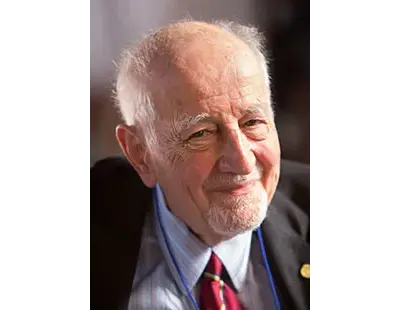
Guido Calabresi is an Italian born American legal scholar and Senior United States Circuit Judge of the United States Court of Appeals for the Second Circuit. He is a former Dean of Yale Law School, where he has been a professor since 1959. Calabresi is considered, along with Ronald Coase and Richard Posner, a founder of the field of law and economics.
