Yehuda Ashlag Quotes
It is the nature of the idealist to sacrifice all that he has for the triumph of his idea. If one must relinquish one’s ideal in even the smallest measure, it is not a full relinquishment. Instead, one keeps a watchful eye for an opportune moment to come and collect his own. Thus, such compromises (with idealists) are untrustworthy.
Yehuda Ashlag, 1886-1954, Jewish Kabbalist Philosopher from Jerusalem, The Solution
Sourced by: Eigen's Political and Historical Quotations


Jinnah had whipped up his followers to violence so that Muslims were attacking Sikh and Hindu neighborhoods, burning them and murdering many occupants in different parts of India to intimidate the Indian Governmental Ruling Congress Party, The British Colonial Indian officials and the politicians in London to create a Muslim state—Pakistan—with all the territory that they demanded. Many Muslims were in turn killed in retaliatory attacks. The American diplomats and most English politicians tried to persuade Jinnah to compromise on the division of land and resources. Jinnah saw no reason at the time for compromise. However the internecine violence became so brutal and extensive that even Jinnah was shocked. The British would not be intimidated nor would the Indian Congress party and Jinnah was forced to compromise. Even with that, there were over 2 million Indians killed by the time the partition was complete. Jinnah and most other leaders were not willing to die themselves, but they were able to convince enough of their coreligionists to die.

This position is a classical example of what some call a “hard line” negotiation stance. It argues that the enemy will never agree to anything that would be reasonable or acceptable to you UNTIL he has given up all hope of getting everything he wants. So this approach says there is no point in even discussing or negotiating anything until the military and economic and diplomatic situation is such that the other side has no hope of winning all it wants. In the case of the Arab Israeli dispute, for 50 years the Arabs believed that they would defeat the Israelis and push them out of the Middle East. For almost 50 years they would not even sit at the same table and negotiate anything. After starting and losing several wars, and falling further and further behind, the moderates began to be reasonable and hinted that they would accept Israel’s right to exist. However, there are some Israelis who argue as Jabotinsky did that there should be no discussions at this time until Hamas and all the terrorist groups have either given up or have been disarmed. This sort of hard line has rarely led to peace—especially if there are hard liners on both sides. They say never negotiate when you are weak. However if you are strong, there is no imperative to negotiate.

While it is true that there is a powerful minority of Palestinians and Palestinian organizations—Hamas & Hezbollah, for example whose official position is that there must be no compromise with Israel and Jews must be killed unless they convert to Islam, there are ultra-orthodox, religious, Jewish groups who believe that all the land in dispute was given to the Jews by God and there can be no compromise. The majority of Israelis believe that there is no Palestinian leadership who can stand up to the powerful minorities. The majority of Palestinians believe that the Israeli governments will never stand up to thieir powerful minorities. The Israeli Prime Minister was trying to signal the Palestinians, that if they compromise, the Israelis will also, but neither side has a lot of credibility when it comes to land, borders, and religious identity and that is especially true of this Israeli Prime Minister, who many Israelis (and many Americans) doubt that he will compromise on the land and borders with all the Israeli settlers already inhabiting enclaves of what is, by every law (International, Israeli, and traditional Arab—with the exception of God’s law of the Old Testament—which agrees that the Israelis or the Jewish People do not have title to or control over the lands outside of Israel proper.


Erecat was expressing his frustration with the peace negotiations and the lack of progress.

This was before secession and “Confederacy” as Lincoln was using the term referred to the Confederacy or the original 13 states and the territories that joined the Union thereafter.

Wolfe uses the term in the classic sense of appeasing Hitler or Stalin—appeasement of a powerful totalitarian force. However some politicians—usually at the extreme wings of the political spectrum—see any concession to political opponents as “appeasement”. Some, like the Tea Party Republicans of that era, regard any compromise as “appeasement”.

This argument is is usually made by the right wing. However, this quotation is notworthy because it was made by a left wing liberal.

As the Majority Leader of the House, Eric Cantor had to resolve conflicts and for coalitions that will compromise to get anything done. However, the Tea Party movement didn’t want any compromises even if it meant shutting down the government and defaulting on the national debt. They ran against conservative Republicans in the Republican primary elections campaigning that the incumbent made and facilitated compromises with Democrats. In some districts like Eric Cantor’s there were enough primary voters who agreed. Terry was explaining the message that the other conservative politicians received.


This quotation is noteworthy because it is typical with every politically extremist group. Negotiation and compromise are unacceptable and even dangerous to them. Almost a century after this quotation the Tea Party was making the same kind of statements.
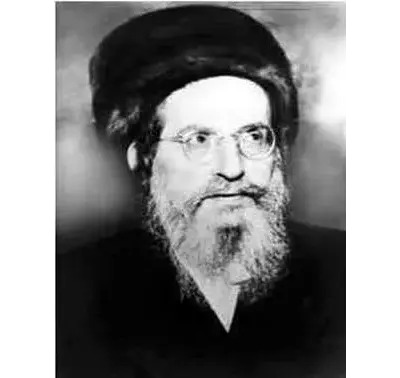
Rabbi Yehuda Ashlag (1885–1954) or Yehuda Leib Ha-Levi Ashlag (Hebrew: רַבִּי יְהוּדָה לֵיבּ הַלֵּוִי אַשְׁלַג), also known as the Baal Ha-Sulam (Hebrew: בַּעַל הַסּוּלָם, "Author of The Ladder") in reference to his magnum opus, was an orthodox rabbi and kabbalist born in Łódź, Congress Poland, Russian Empire, to a family of scholars connected to the Hasidic courts of Porisov and Belz. Rabbi Ashlag lived in the Holy Land from 1922 until his death in 1954 (except for two years in England). In addition to his Sulam commentary on the Zohar, his other primary work, Talmud Eser Sefirot is regarded as the central textbook for students of Kabbalah. Ashlag systematically interpreted the wisdom and promoted its wide dissemination. In line with his directives, many contemporary adherents of Ashlag's teachings strive to spread Kabbalah to the masses.
