Gertrude Stein Quotes
It is funny the two things most men are proudest of is the thing that any man can do and doing does in the same way, that is being drunk and being the father of their son.
Stein, Gertrude. Everybody's Autobiography. Random House, 1937.


Samuel Langhorne Clemens, 1835-1910. The Congressmen who voted for Prohibition in the next century had not read or believed this quotation of Twain’s.

Alcoholism is a disease that has affected people of every occupation, every socioeconomic class, every color and nationality, and we all have seen instances so often that most people realize that anyone might be addicted to alcohol. The result is any accusation that someone is an alcoholic is plausible to most of us. As a result of this, it has become a favorite untrue slander in political attacks. Even when false it is believable as in the earlier decades of America, drinking heavily was a part of political culture and many would become addicted.


When Washington was younger and running for the colonial Virginia assembly, he bought beer and rum for all the voters in his precinct. He did not then realize the damage that alcohol can do. One of the commonalities between Lincoln and Washington were their experience in seeing alcohol cause the death and/or ruination of many. See {630832}.


He was describing the way that the Colonial America, Native American communities coped with the adverse consequence of violence brought about by liquor which had been given to the Indians by white traders for the purpose of impairing the Indians’ judgment so that they would trade more easily and on better terms. Since then and into the 21st century, business people have entertained’ potential customers with alcohol for the same general purposes.


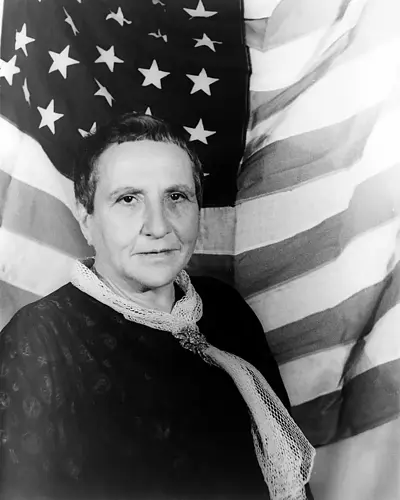
Gertrude Stein was an American novelist, poet, playwright, and art collector. Born in Pittsburgh, Pennsylvania in the Allegheny West neighborhood and raised in Oakland, California, Stein moved to Paris in 1903, and made France her home for the remainder of her life. She hosted a Paris salon, where the leading figures of modernism in literature and art, such as Pablo Picasso, Ernest Hemingway, F. Scott Fitzgerald, Sinclair Lewis, Ezra Pound, Sherwood Anderson and Henri Matisse, would meet.
