Yakov Smirnoff Quotes
In Russia we only had two TV channels. Channel One was propaganda. Channel Two consisted of a KGB officer telling you: Turn back at once to Channel One.
Smirnoff, Yakov. America on Six Rubles a Day. Vintage Books, 1987.


This was a big factor that made the Red Scare so damaging.


then KGB leader. Khrushchev had rounded up and arrested an assortment of dissidents and non enthusiastic communists It was to culminate in 8 million arrests and 1 million executions.


After the breakup of the Soviet Union, NATO expanded to include some fo the former Soviet Nations thus moving NATO territiry to the East--closer to Russia, whose leaders percieved that the expansion was hostile and dangerous for the indpendence of Russia. What made the situation more complex is that the American Secretary of State, when the Soviet Union was very powerful, had made an agreement with the Soviets that in return for Russian aquiessance of NATO being extended to East Germany, NATO would not expand further West. But after the collapse of the Soviet Union, Russia was quite weak and NATO expanded east despite the earleir comittment. The US and th eother NATO counties took the pozition the previous comitmnts were not binidng as they were never formally signed. The Russians then decided to take a hard line position and flaunt and use military force to which would stop the Western expansion closer to the Russian border.


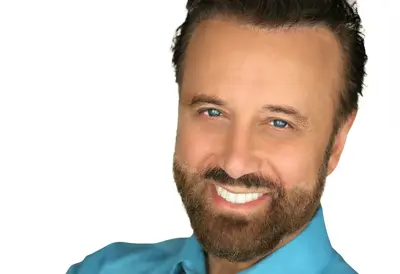
Yakov Naumovich Pokhis, better known as Yakov Smirnoff (Russian: Яков Смирнов; /ˈsmɪərnɒf/), is a Ukrainian-American comedian, actor and writer of Jewish origin. He began his career as a stand-up comedian in Ukraine, then immigrated to the United States in 1977 in order to pursue an American show business career, not yet knowing any English. He reached his biggest success in the mid-to-late 1980s, appearing in several films and the television sitcom vehicle What a Country!. His comic persona was of a naive immigrant from the Soviet Union who was perpetually confused and delighted by life in the United States. His humor combined a mockery of life under communism and of consumerism in the United States, as well as word play caused by misunderstanding of American phrases and culture, all punctuated by the catchphrase, "And I thought, 'What a country!'"
