Toomas Hendrik Ilves Quotes
In Russia, tweeting or sharing real news that's embarrassing to the regime can land you in prison. Imagine, then, the response of the regime to 'fake news' that's damaging to the Kremlin.
Ilves, Toomas Hendrik. "The Cyber-Threat to Democracy." Project Syndicate, 15 Feb. 2017.


Russian Tanks moved into Prague and returned “order” ending the reform. Dubcheck was arrested and flown to the Soviet Union.


America was entering the First World War as a combatant but there was considerable anti-war sentiment. The Wilson administration over-reacted and instituted many repressive laws and regulations. Leading Americans like Eugene Debs was jailed for several years simply for opposing the war and the military conscription that went with it. Our scientists were not allowed to receive German scientific journals which of course hurt us and not the Germans who read their research and ours.


This was a big factor that made the Red Scare so damaging.


The early revolutionary Chinese Communists had a much more democratic and civil-liberties oriented view of government than after the had won and gained control of China. Then the problems were so enormous with such meager resources that the insecurity of the party government let to a civil rights flip flop and a politically authoritarian government. Stability is today the most important priority for the Chinese Communist party so that free speech, protests and other civil liberties are curtailed. Economic development is the more important activity and political development is lagging, but while economic development is racing ahead, Chinese political development improves only slowly. Dissidents like Liu Xiaobo are pushing the process.

For a corroberating quote see Quotation 644762


It is one of the tactics of Putin’s Russia. as it was with the Stalinist Era, to commit dissidents to mental institutions under the twisted logic that no one who was sane could possibly ge against such a beneficent government,

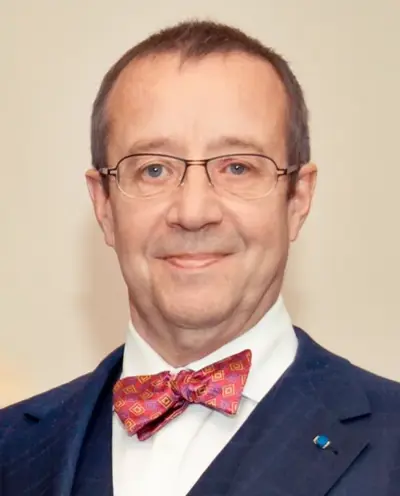
Toomas Hendrik Ilves is an Estonian politician who served as the fourth President of Estonia from 2006 until 2016. Ilves worked as a diplomat and journalist, and he was the leader of the Social Democratic Party in the 1990s. He served in the government as Minister of Foreign Affairs from 1996 to 1998 and again from 1999 to 2002. Later, he was a Member of the European Parliament from 2004 to 2006. He was elected as President of Estonia by an electoral college on 23 September 2006 and his term as President began on 9 October 2006. He was reelected by Parliament in 2011.
