Edmund Burke Quotes
In effect, to follow, not to force, the public inclination,—to give a direction, a form, a technical dress, and a specific sanction, to the general sense of the community, is the true end of legislation.
Edmund Burke, 1729-1797, Irish Orator & Member of the British Parliament, Letter to the Sheriffs of Bristol, April 3, 1777
Sourced by: Eigen's Political and Historical Quotations


In America we do not have an official church that can morally speak for the society as a whole. As a result, we often use the law to make a moral statement even if the law is rarely enforced like prostitution. Sometimes we hear the expression, “There ought to be a law” as that is the only way we can express a societal moral value.


Eleven years later, abuses were so great and things were so bad that Gladstone reversed himself and the Wyndam Act to regulate Irish rents was passed.


Many new laws have unintended consequences. In many cases the laws are not sufficiently effective to solve the problems for which they were passed. In other cases, the laws are too draconian and the public and the legislators have second thoughts. Almost all laws of significance require amendments and adjustments over the years.

At the time the power and prestige of Congress relative to the Presidency , was much greater than it is today. It was McKinley’s successor, Theodore Roosevelt, who began a 20th century trend which led to a reversal of the relationship between the Executive Branch and the Legislative.


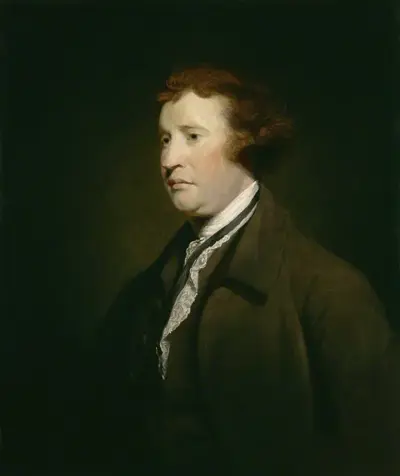
Edmund Burke was an Irish statesman, economist, and philosopher. Born in Dublin, Burke served as a member of parliament (MP) between 1766 and 1794 in the House of Commons of Great Britain with the Whig Party after moving to London in 1750.
