John Locke Quotes
The legislature cannot transfer the power of making laws to any other hands, for it being but a delegated power from the people, they who have it cannot pass it over to others.
John Locke, 1632-1704, English Political Philosopher, Two Treatises of Government
Sourced by: Eigen's Political and Historical Quotations

In 1628 Parliament, in response to abuses by King Charles I, was about to pass The Petition of Rights–-a type of Bill of Rights. The King gave assurances that the practices—such as forcing nobles to lend him money—would not continue and didn't want to be embarrassed by passage of a law which he claimed would indicate that the Parliament did not trust him and weaken the dignity of the monarchy. The Petition of Rights passed with Cole’s leadership.

A veto power for the President would be absurd because


The founding fathers, were well aware of one very ugly aspect of England’s parliamentary system. The King or Queen who does not care for legislation that was being debated, would, if they thought the offensive legislation would pass, would simply dissolve Parliament. The Constitution was written so that this can never happen.

If a party controls one of the two houses of Congress, they can block any legislation. But governing involves passing legislation, and in our bi-cameral Congress, control of one house is not sufficient to pass legislation.


Though not very dramatic or succinct, this is a very important quotation in American History. The original drafters of the Constitution concentrated on limiting the powers of the executive—the role of the King. But the Congress had no limits placed on them. In Britain, to this day, the Parliament can do whatever they wish as there is no restraint on them other than their prudence and reasonableness. Madison used the example of the Alien and Sedition Acts—huge infringements on the rights of Americans—to show why the legislative branch must also be more restrained and limited. And that was the logic behind adding the Bill of Rights to our Constitutions.


the power a ruler or a ruling class


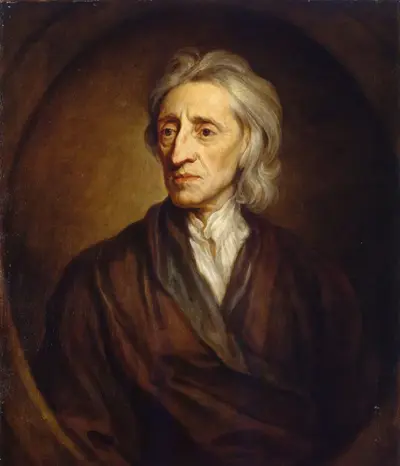
John Locke FRS was an English philosopher and physician, widely regarded as one of the most influential of Enlightenment thinkers and commonly known as the "Father of Liberalism". Considered one of the first of the British empiricists, following the tradition of Sir Francis Bacon, Locke is equally important to social contract theory. His work greatly affected the development of epistemology and political philosophy. His writings influenced Voltaire and Jean-Jacques Rousseau, and many Scottish Enlightenment thinkers, as well as the American Revolutionaries. His contributions to classical republicanism and liberal theory are reflected in the United States Declaration of Independence.
