Francis Bacon Quotes
A wise king must do less in altering his laws than he may; for new government is ever dangerous …
1st Baron Verulam
Francis Bacon, 1561-1626, Lord Chancellor of England, Essay XIV., Of a King
Sourced by: Eigen's Political and Historical Quotations

In 1628 Parliament, in response to abuses by King Charles I, was about to pass The Petition of Rights–-a type of Bill of Rights. The King gave assurances that the practices—such as forcing nobles to lend him money—would not continue and didn't want to be embarrassed by passage of a law which he claimed would indicate that the Parliament did not trust him and weaken the dignity of the monarchy. The Petition of Rights passed with Cole’s leadership.


The statement so offended the Lords—the highest court of England—that he was imprisoned by the Lords and not released until he had recanted the position. The argument goes on today in many countries incuding the United States.


A veto power for the President would be absurd because


He and Thomas Jefferson were the two most vocal propononents of this view amongst the Founding Fathers.


This was in effect a “Real Estate Promotional Document. Democracy, self government, and the right to set their own taxes were major selling points. See {611572} and {611571} for other “features.”


This is the earliest surviving attempt of the Romans to formulate a legal code.

This Cahier was the consensus of the Clergy of Blois in 1789. There were cahiers of several provinces of France—some by the clergy, some by the nobles. What is fascinating is the emergence of many of the pre-revolutionary French concepts. The example of the American revolution and its principles was known throughout the educated classes of France.

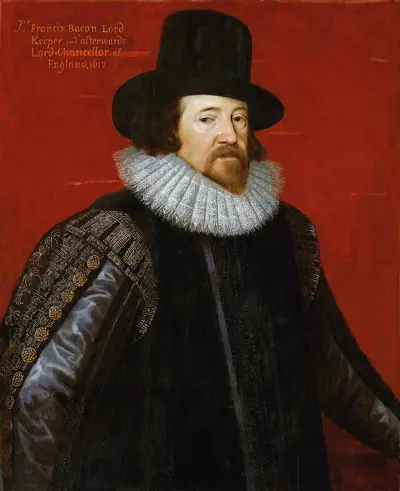
Francis Bacon, 1st Viscount St Alban, Kt PC QC, also known as Lord Verulam, was an English philosopher and statesman who served as Attorney General and as Lord Chancellor of England. His works are seen as developing the scientific method and remained influential through the scientific revolution.
