Earl Butz Quotes
I'll tell you what the coloreds want. It's three things: first, a tight pussy; second, loose shoes; and third, a warm place to shit.
President Ford forced him to resign. He had been a holdover from the Nixon Administration. Ford did not chooses him. Nixon appointed him on the advice of the ultra conservatives in the party who liked the fact that he wanted to dismantle many of the FDR New Deal policies. However, he came from Indiana which was the lost racist of all the Northern States. In the 1920s Indiana had the largest membership in the KKK of any state in the Union, and Butz came from this line of racists. He also was convicted for Federal Tax Evasion.
Earl Butz, 1909-2008, U. S. Secretary of Agriculture (Republican) Remark he made in front of entertainer Pat Boone and former White House counsel John Dean while aboard a commercial flight to California following the 1976 Republican National Convention, Quoted in Time, October 18, 1976
Sourced by: Eigen's Political and Historical Quotations

Forrest went on to be the first National Leader of the Terrorist Organzation.


This quotation provides us with several important insights in American history. First, the Director of the FBI was an inveterate racist. Second, he felt no inhibition on sharing this discriminatory view with the Media. Third, he is yet another source for the fact that Blacks did not have a decent opportunity to get an education. There were some Southerners who maintained that they did have such an opportunity in the “Separate but Equal” segregated schools systems of the South. Hoover was not the only racist in the upper ranks of the FBI; most of the leadership was prejudiced. See {620621} and {74219} .

The law enforcement officers were the ones who broke the law when they beat and brutalized the peaceful civil rights marchers. The “white niggers” refer to the white marchers including clergy.

This quotation illustrates the degree or irrationality that Southerners practiced in considering racial matters. Lee was stating what virtually all Southern “Gentlemen” believed. Here was a class of people who had hardly worked at day in their lives opining on the work attitudes of the class of people who did most of all the work in the South. The Southern Whites not only expected the Negro slave to do the work, but to be enthusiastic about working. And it never even occurred to Lee and most of the other whites that Negro lack of “disposition” to work was the result of the fact that they were forced to work with the benefits going to someone else. It was a character flaw in Blacks, if they were not enthusiastic and disposed to work when forced to. One of the few ways a slave could register his/her protest was to beat the system now and then and do as little work as possible. Free Blacks in the North were among the hardest and most enthusiastic working people in America—certainly moreso than the Southern white gentlemen.


President Johnson said this after a meeting with governors from the South and border states, who had criticized his policies on civil rights as well as his vocal support of expanded rights for blacks

The issue of slavery which had been suppressed in Congress for the first decades of the nation broke out when Missouri statehood was considered. By previous agreement, slavery was not even discussed in Congress but the time period elapsed. Tallmadge not only proposed that no more slaves could come into Missouri {613176} but most shocking to the Southerners was that every person born in the new state would be free at the age of 25. In a generation, there would be no more slavery in Missouri and there would be no economic compensation for slave owners at all. The House of Representatives accepted the amendment, but it failed in the Senate. At that time, Senators were not elected by voters but were appointed by the state legislators and the Southern slave states had a disproportionate share of the senate from a population point of view. But what this quotation shows clearly that a majority of the country in 1819 were opposed to slavery and were willing to end it without compensation.


Booth was the younger son of a very prominent Northern family of actors. His older brother was considered the greatest American actor, and the rest of the family were abolitionists and vehement Union supporters. They found young John’s views reprehensible.


When called upon to resign by members of the town council, he refused on the grounds that he had a right to freely express is views of President Obama or anyone else. There was no impeachment statute at the time in Wolfeboro and people were not happy about waiting for the next election. There was much pressure brought to bear including some who boycotted the town. He resigned 2 monnths later.
[This was the first Abolition appeal written by a Black Man. It was published in Boston and despite the fact that it was very critical of whites, was very popular going through two more printings within the next two years.]


He was not only an atheist himself, but he was a major opponent of organized religion which he regarded as one or the major initiators and drivers of slavery, segregation and discrimination. For this reason he was critical of Martin Luther King—{583307}. His irreligiosity had always prevented his gaining much support from his fellow African Americans even though a great writer like H. L. Menken considered Schuyler, "the best writer in America".
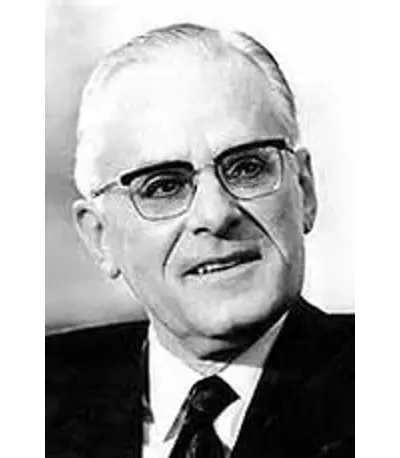
Earl Lauer "Rusty" Butz was a United States government official who served as Secretary of Agriculture under Presidents Richard Nixon and Gerald Ford. His policies favored large-scale corporate farming and an end to New Deal programs.
