Nathan Bedford Forrest Quotes
If you surrender you shall be treated as prisoners of war, but if I haveto storm your works you may expect no quarter.
United States War Department. The War of the Rebellion: A Compilation of the Official Records of the Union and Confederate Armies. Series 1, Vol. 32, Part 1, Government Printing Office, 1891, p. 546.


General Grant had the fort surrounded and the confederate general hoped to surrender the fort and allow him and his men to leave to fight again some other day. This was often agreed to so the military objective would be gained without the casualties of a battle. However, Grant and Lincoln did not simply want to gain forts and territory. They wanted to end the war. Those Confederates who survived the battle were taken prisoner and were out of the fight.

The Falkland Islands were very close to Argentina and far from England. The Argentineans had offered the few Islanders large sums of money to become part of Argentina, but this was rejected. Argentina was a military dictatorship with a terrible record of human rights abuses. The Falklanders preferred their traditional British style of government and affiliation. The Argentinean generals assumed that if they invaded, once they controlled the Falkland Islands, they could negotiate with the British over issues of sovereignty. They misinterpreted the American UN Delegate and concluded that America would not support Britain in a military response; they also assumed that while the British would complain in the UN, they would never go halfway around the world to invade the islands, now occupied and reinforced by Argentina. Thatcher would not negotiate unless the invaders left the islands. They did not do so voluntarily. The Argentinian military had been abusing their own citizens for so long that they had an inflated concept of their fighting ability. Britain freed the islands militarily, and Argentina was humiliated. The military government fell bringing democracy to Argentina—the only good that came out of the Faulklands War.


The so called War on Terror had many lessons. President Obama and many of the military leaders in the Pentagon realized that just as we evolved the concept of a Cold War, a new concept was needed to deal on the long run with the Al Qaeda terrorists. Typically in war, the nation is fully mobilized with the surrender of the enemy the major objective. When peace is negotiated, there is some demobilization and other things begin to take precedence. However, given the non state highly decentralized nature of Al Qaeda, there is no way to ever negotiate peace because no Al Qaeda official can speak for any more than his immediate cell and cadre. They will likely never stop attacking in any foreseeable future since their motivation is ideological and religious. It doesn’t take full military mobilization to protect against individual acts of terrorism, and indeed arguably the large mobilization only gives the terrorists more nearby targets. So American leaders were evolving a state of high protection, surgical strikes and attacks on Al Qaeda leadership and cells, and at the same time a demobilization of many of the overseas ground troops. It is not a state of war yet there will be attacks from time to time against us and attacks by us on Al Qaeda, yet there cannot be an all out war which is de factor non winnable in toto, but is very controllable. For Stein and other hawks, this new state is unfathomable. If there is any attack on Americans or American interests to them we are either at war with full mobilization or have surrendered. The total number of American civillians killed in the 10 year war on terror has been less than 2 months of normal automobile crash deaths or 3 months worth of gun accidents, or one tenth of the deaths caused by flu in a single year.

The Emperor had sent a challenging message to the young Ottoman Sultan {634798}. Constantine would not negotiate terms of surrender despite the overwhelming strength of the Turkish forces. The Sultan attacked and took the city in a battle where not only was Constantine killed but a large part of his people as well. The Muslims have held Byzantium (Constantinople, now Istanbul) since.


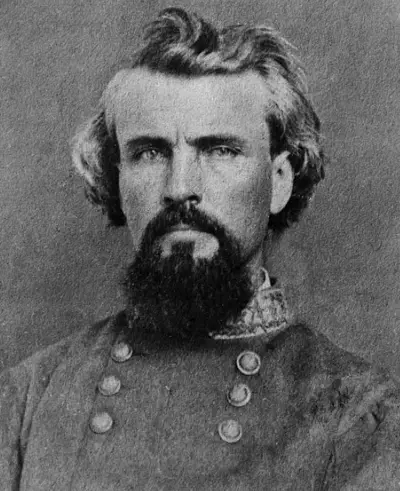
Nathan Bedford Forrest was a prominent Confederate Army general during the American Civil War and the first Grand Wizard of the Ku Klux Klan from 1867 to 1869. Before the war, Forrest amassed substantial wealth as a cotton plantation owner, horse and cattle trader, real estate broker, and slave trader. In June 1861, he enlisted in the Confederate Army and became one of the few soldiers during the war to enlist as a private and be promoted to general without any prior military training. An expert cavalry leader, Forrest was given command of a corps and established new doctrines for mobile forces, earning the nickname "The Wizard of the Saddle". His methods influenced future generations of military strategists, although the Confederate high command is seen by some commentators to have underappreciated his talents. Although scholars generally acknowledge Forrest's skills and acumen as a cavalry leader and military strategist, he has remained a controversial figure in Southern racial history for his main role in the massacre of several hundred Union soldiers at Fort Pillow, a majority of them black, coupled with his role following the war as a leader of the Klan.
