Patrick Soon-Shiong Quotes
If you look upon chronic diseases as an epidemic, and you see that the chronically ill are the poor, then you see that this issue of the uninsured is not really a moral but a financial obligation to change health care.
Soon-Shiong, Patrick. "Reimagining Healthcare." Forbes Healthcare Summit, Forbes, 10 Oct. 2012.


In some areas, the United States has the best performance in the entire world—length of survival rates for breast cancer and some other diseases for example. However, on basic medical services, like infant mortality, we have a poorer record than all the other industrialized countries. Cuba and Costa Rica are better than us in this area and their citizens actually have a longer life expectancy than Americans. Emmanuel makes the argument that the cost differential between US health care and other—even better systems—is so great that we can easily save money and reform our system without rationing medical care or wait in lines for surgery. However, to do so, there must be huge reforms and few in the system want to risk changing anything. It is hard for most Americans to face the fact that other countries offer obvious medical superiority in many areas. For example, in France, if you call their emergency telephone number for a medical emergency a doctor answers the phone, not an operator with only modest medical knowledge. When a French ambulance is dispatched, it does not have emergency medical technicians only, but there is a doctor and a nurse in the ambulance. And the ambulance itself is equipped to do emergency surgery of other critical treatment if time is critical.


At the time in America, the insurance companies only paid out less than 80 percent of all the money they took in for health insurance. More than 20 percent went into their high overhead and profits. In contrast, to the 20 percent or more that it costs with insurance companies to administer health insurance payments, the agency that performs the same function for Medicare doe so with only a 6 percent cost Sanders argued that by getting rid of the insurance companies, the nation could save about 14 percent of the entire insured medical bills for the nation—many billions of dollars which would reduce average health insurance premiums by 14 percent. Opponents argue that the would be a socialist system and give too much potential control of individual health matters to a government operated or government controlled organizations. Politicians, in order to look good with the voters, would lower premiums and also pay out less either shortchanging doctors and hospitals or rating medial care somehow.

The Republicans were trying to repeal the first national health reform since Medicare. But the part was split over what they would replace it with. Many wanted to give the health insurers more power and profits, but other Republicans like Cruz did not want to see the helath insurance premiums increase. Ironically, most members of Congress at the time agreed with Cruz's focus on lowering or at least holding health insurance premiums steady, but this was vert hard to do without heavily regulating the insurance companies or adding a public insurance program to compete with the insurance companies or eliminate the rights of the individual states to regualte and control; insurance in their state. And no majority could be found for any of these.


Hai Thuong Lan Ong. Although half a world apart and a totally different culture compare the similarity of {42220}


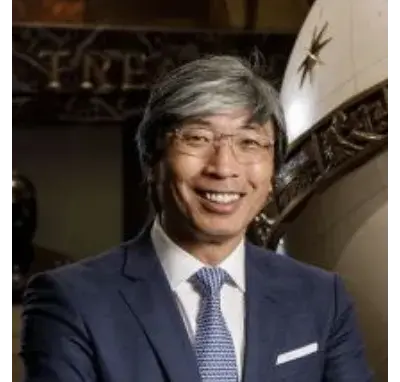
Patrick Soon-Shiong is a South African-American transplant surgeon, billionaire businessman, bioscientist, and media proprietor. He is the inventor of the drug Abraxane, which became known for its efficacy against lung, breast, and pancreatic cancer. Soon-Shiong is the founder of NantWorks, a network of healthcare, biotech, and artificial intelligence startups; an adjunct professor of surgery and executive director of the Wireless Health Institute at the University of California, Los Angeles; and a visiting professor at Imperial College London and Dartmouth College. Soon-Shiong has published more than 100 scientific papers and has more than 230 issued patents worldwide on advancements spanning numerous fields in technology and medicine.
