Bernard Baruch Quotes
If you get all the facts, your judgment can be right. If you don't get all the facts, it can't be right.
Bernard Baruch, 1870-1965, Businessman & Chairman, War Industries Board, U. S. Delegate to U.N. Atomic Energy Commission, Quoted in The St. Louis Dispatch, June 21 1965
Sourced by: Eigen's Political and Historical Quotations


While the context applied to making business policy decisions, he also advocated it for politics and managing government. If policy makers or managers speculate and then act to fix possible and imaginable problem, they will waste time and resources dealing with eventualities that may never come to pass. A better strategy is to obtain data, analysize that, and fix the problems that we know will occur.


The Labor Department never would commit to a recommendation. The Job Corps leadership examined the insufficient data and made their best guess which for the most part turned out to be right as the Job Corps was the most effective youth job training program in the history of the country. It and Head Start were the only two of the anti-poverty programs that were still operational into the 21st century. Supreme Court Justice Learned Hand expressed the same idea more generally in {482001}.


Despite strong efforts by the health authorities, many Americans went into an irrational panic mode regarding Ebola and States and local government were passing draconian quarantine measures that were actually counter-productive and increased the risk by pandering to public fears often instigated or whipped up by some media pundits.


The best example of this is the role that distant history has in the current Balkans and Arab countries where terrible current judgment about society or foreign affairs is totally driven by an exquisitely detailed memory of a particular version of distant history.

Even today, the lack of logic in many fields—especial politics and public policy—has caused an intellectual and emotional rift between scientists and many in government. Bush was one of the great scientists and thinkers in American history. He had advised FDR to go ahead with the research and development program to try and develop an atomic bomb. He was the only Government Official who Roosevelt discussed the idea with. At the time, Bush as a government official supervised and directed many thousands of scientists, and was one of just a few scientists who monitored and advised on the Manhattan Project to develop the Bomb.
This was an indirect criticism of Condoleezza Rice, the National Security Advisor to George W, Bush for not taking a role that Mazarr and many others believe she should have. On the other hand, President Bush selected her precisely because she shared his values and instincts. Perhaps, Bush should have selected and advisor who held a DIFFERENT view and perspective from himself. This quotation reveals the classic dilemma of political appointments of key advisors and cabinet members. Bush and Ronald Reagan tended to select advisors who agreed with them in philosophy and politics. FDR and Obama, followed the Lincoln tradition and appointed many advisors who were not intellectual clones of their own views and values.


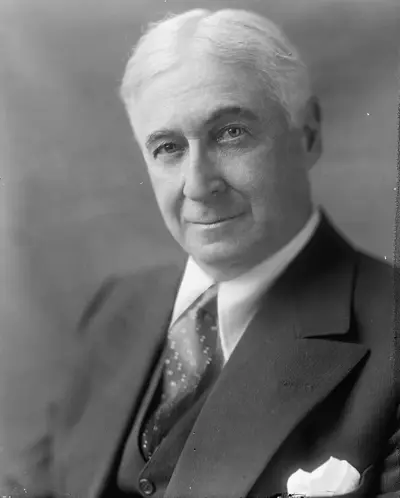
After amassing a fortune on the New York Stock Exchange, he impressed President Woodrow Wilson by managing the nation's economic mobilization in World War I as chairman of the War Industries Board. He advised Wilson during the Paris Peace Conference. He made another fortune in the postwar bull market, but foresaw the Wall Street crash and sold out well in advance. In World War II, he became a close advisor to President Roosevelt on the role of industry in war supply, and he was credited with greatly shortening the production time for tanks and aircraft. Later he helped to develop rehabilitation programs for injured servicemen. In 1946, he was the United States representative to the United Nations Atomic Energy Commission, though his Baruch Plan for international control of atomic energy was rejected by the Soviet Union.
