Zhang Zhidong Quotes
If the Chinese will not learn the true principles of government, all else will be useless. Knowledge is power, and although a country may be weak, still, if it possess but a modicum of knowledge, the enemy will not be able to completely overthrow it; although that country may be in danger, the race will not be extirpated.
Chang, Chih-tung. China's Only Hope: An Appeal. Translated by Samuel I. Woodbridge, Fleming H. Revell Company, 1900.


It is hard for us to envision that sophisticated and intelligent men like Sherman would actually see Communism as a danger of defeating capitalism. Our intelligence was poor and often exaggerated to justify military buildups and much of the leadership made statements like this and then many began to believe their own propaganda. Ironically, those who knew communism the best were more aware and realistic of the fatal flaws in not only communism in general but in the particular Soviet repressive version of communism. It would take almost 50 years, but the Soviet Union collapsed revealing its weaknesses for all to see.

Every major Western power and Japan were looking to control parts of China for their own mercantile advantage. The Emperor, her adopted son, had stated that under no circumstances would the Chinese fight, but Cixi issued this decree, in effect, overruling the Emperor—a remarkable occurrence.


She and her husband, like many of the "America Firsters", believed that Hitler should be allowed to overrun Europe and Russia.


While to Madison the principle that “war is better than tribute” was “settled policy”, there were many who disagreed. See {640867} as an example.


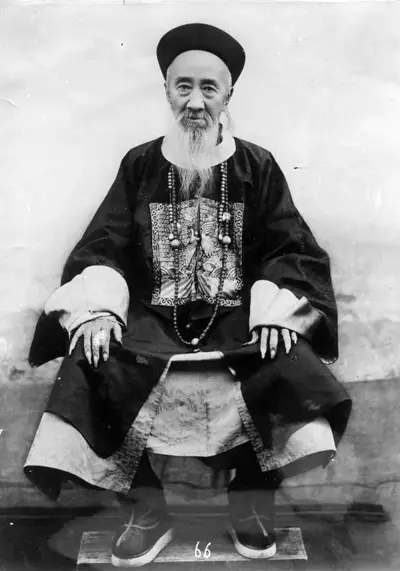
Zhang Zhidong (Chinese: 张之洞) was a Chinese official who lived during the late Qing dynasty. Along with Zeng Guofan, Li Hongzhang and Zuo Zongtang, Zhang Zhidong was one of the four most famous officials of the late Qing dynasty. Known for advocating controlled reform and modernization of Chinese troops, he served as the Governor of Shanxi Province and Viceroy of Huguang, Liangguang and Liangjiang, and also as a member of the Grand Council. He took a leading role in the abolition of the Imperial examination system in 1905. The Red Guards destroyed his tomb in 1966 during the Cultural Revolution. His remains were rediscovered in 2007 and reburied with honors.
