David Lampton Quotes
If the American people are going to support a policy than they had better be made to understand the rationale.
David Lampton, Author and Political Scientist, Speech, Council on Foreign Relations, C-SPAN Book TV, February 24, 2001
Sourced by: Eigen's Political and Historical Quotations


Coolidge had no involvement in politics after his Presidency. He was never consulted by his successor and never resented that fact.

The public desire to know about and influence the details about diplomatic affairs is not just a problem of the 21st century. Here the Secretary of State describes it in 1922.


In the Watergate crisis H. R. Haldeman had asked for a Presidential pardon. A discussion of the request was held by some White House staff members:


This is a wonderful historical picture of FDR on his campaign train. Note that the President liked to listen to ideas of many people. Unlike most Presidents he did not have any particular political programs that he advocated in his campaigning. He had no immediate answers to the Great Depression that he had inherited from the Hoover administration. But unlike Hoover, and most Presidents, he was willing to try ideas for which there was no advance evidence of success. If that did not help, he would try something else. He sought ideas from anyone and everyone. His enemies called him a weak leader who had no ideology—no principles but just trying unproven solutions to solve the nation’s critical problems. But it worked and he was elected 4 times—the only President who had served even 3 terms.


She had been accused of being a follower of public opinion rather than a driver of it as many politicians see themselves. At the time, she refused to stake out specific positions in her contest for the presidential nomination of her party—the socialists. She won the primary, the first such French woman, but lost in the general election.


He had spent a great deal of time traveling and observing President Barack Obama. While he and many others appreciated the contemplation that Obama gave to serious issues, there were many people who saw it as a lack of courage to act swiftly or an elite intellectual proactice.

Americans had never had the opportunity to see this committee in action before. While many Americans were intimidated, many were also very distressed to see how a Congressional Committee was abusing its power. And although the frightened Hollywood and network executive executives were intimidated into blacklisting Lawson and others, more and more Americans were lining up against this committee and Senator McCarthy’s committee in the Senate. This culminated in the Senate sanction of McCarthy and the discrediting of HUAC which never again had the influence that they had before this hearing.

His polls were low—55 percent disapproval and only 43 percent approval) at the time as a result of the poor management of the Obamacare rollout.
Ironically, Mrs. Roosevelt was often called by her political enemies a socialist who would weaken the citizen’s sense of personal responsibility.

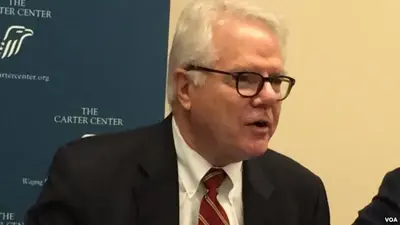
David M. Lampton (born 1946) is George and Sadie Hyman Professor and Director of China Studies Emeritus at the Johns Hopkins Paul H. Nitze School of Advanced International Studies as the founding director of its Chinese Studies Program. Prior to 1988, Dr. Lampton was founding director of the China Policy Program at the American Enterprise Institute and associate professor of political science at Ohio State University where he started his academic career in 1974. After serving as Oksenberg-Rohlen Fellow at Stanford University's Asia-Pacific Research Center (2019-2020), he returned to SAIS where he is Senior Research Fellow at the Foreign Policy Institute. In 2020, with co-authors Selina Ho and Cheng-Chwee Kuik, he published Rivers of Iron: Railroads and Chinese Power in Southeast Asia (University of California Press), on PRC high-speed rail construction in eight Southeast Asian states.
