Elihu Root Quotes
In the democratic countries generally, the great body of citizens are refusing to wait until negotiations are over or policies are acted upon or even determined. They demand to know what is going on and to have an opportunity to express their opinions at all stages of diplomatic proceedings…. public opinion will be increasingly not merely the ultimate judge but an immediate and active force in negotiation.
The public desire to know about and influence the details about diplomatic affairs is not just a problem of the 21st century. Here the Secretary of State describes it in 1922.
Elihu Root, 1845-1937, U. S. Secretary of War & U. S. Secretary of State, U. S. Senator (Republican, NY), Nobel Laureate in Peace, “A Requisite for the Success of Popular Diplomacy”, Foreign Affairs, September 1922
Sourced by: Eigen's Political and Historical Quotations


Prior to this policy change, the Port Authority made and started to implement decisions and THEN held public hearings. The Port Authority is a bi-state organization that is the largest building authority in the country. It has built and operated all the bridges and tunnels connecting New York City Boroughs and the City with New Jersey and Long Island. They also have built and operated many of the major highways and recreation centers in New York City and Long Island. Additionally, it erects large buildings and other facilities like the World Trade Center. It’s funding comes directly from tolls, rents and other income from its facilities and the bonds that it floats, and so does not need any funding from either state. It actually makes a huge profit. It was started by Robert Moses, who wanted Independence of operation from the States of New Jersey and New York and the New York City Government. Moses was known for his authoritarian, non-consultative style, and subsequent Chairman tried to maintain that. Moses and the Port Authority had stayed clear of political influence and corruption. However, gradually the appointees were more and more beholden to the Governors of the two states and in 2014 a major scandal erupted where the New Jersey Governor’s staff was using the Port Authority to punish communities what did not support the Republican Governor Christie. This triggered calls for reform of which this new policy was one of the first.


The Green Party and The Socialist Party had combined in an alliance. This was their publication. In addition to showing that the right to know and freedom of information was a major issue in other industrial democracies as well as the United States, the quotation is particularly interesting because the title of the article was used over 200 years before by none other than the American patriot, Patrick Henry. See {60328}. The phrase has been used many times in many lands since.


This quotation not only illustrates the discomfort of the atomic scientists who developed the atomic bomb regarding the ethics and decision making regarding use, but also how complex a man Teller himself was. Here he sounds like a left-leaning centrist. A little later he would side with the hawks in the military and the political world and slander his colleague Oppenheimer publicly advocating an arms race and the development of the hydrogen bomb when the existing technology of the atom bomb could wipe out Russia or any other nation. His new allies however kept everything about nuclear weapons a secret and thus the public could never weigh in and influence any nuclear decision making. This state existed until President Eisenhower declassified much of the nuclear weapons information as part of his Atoms for Peace program.


Chief legal officer of a Dutch town. He wanted to have a plebiscite in each town on major issues before the assembly so as to instruct the representative as to how to vote. The graphic is a painting of Adriaan van Zeebergh and his board of the Teylers Stichting.
_0_thumbnail_47x47.jpg "Statue of Robert Hall in Leicester.")
For many people the implication of this quotation is that there should be no government secrets withheld from the citizens who have the right to examine. Others argue that government may have temporary secrets to protect against foreign enemies for example, but that these must be declassified very promptly so that the citizens can examine the actions of their government in time to replace the government if they are not satisfied. Almost all government officials tend to reject the first implication out of hand, and grudgingly accept the second with their discretion controlling when declassification should take place. The problem of America is twofold. There is much over-classification (material kept secret that should not be at all), and the time till declassification is long in general and truly absurd in many cases. For example, there are documents from WWII that by 2013 had still not been declassified. See {591444}, {641317}, and {589105} for exemplar views. William Jennings Bryan introduced this principle into the American political dialogue. See {641027}.

Indeed, the control is only one the medium term when after 4 years a President can be replaced by the voters. But a number of President’s have embarked upon foreign policies that was opposed by the majority of the population.


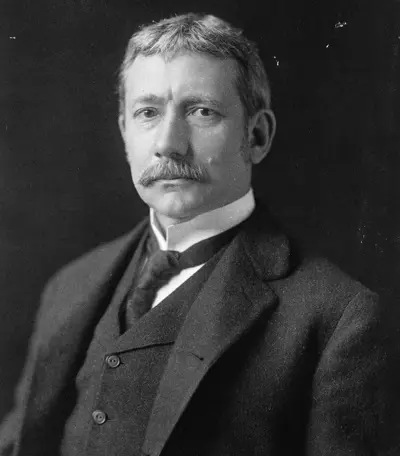
Elihu Root was an American lawyer and statesman who served as Secretary of State under President Theodore Roosevelt and as Secretary of War under Roosevelt and President William McKinley. He moved frequently between high-level appointed government positions in Washington, D.C. and private-sector legal practice in New York City. For that reason, he is sometimes considered to be the prototype of the 20th century political "wise man", advising presidents on a range of foreign and domestic issues. He was elected by the state legislature as a U.S. Senator from New York and served one term, 1909–1915. Root was awarded the Nobel Peace Prize in 1912.
