Herbert Albert Laurens Fisher Quotes
If European democracy owes much to the Protestant Reformation it owes nothing whatever to the direct teaching of the Protestant leaders. — So deeply rooted was the reverence for monarchy that even the wars of religion in France and the Netherlands produced no distinctive republican doctrine.
Herbert A. L. Fisher, 1865-1940, English Historian & Member of Parliament, Minister of Education, The Republican Tradition in Europe, The Harvard University Lowell Lectures, 1910
Sourced by: Eigen's Political and Historical Quotations

This notice of Excommunication was promulgated to the Catholic clergy in Ireland in May of 1538. It required all Roman Catholic leaders to size the property of Protestants or Catholics who sympathized with them. Those who did were then regarded as traitors by the Protestant King. The anti-Protestant feeling culminated with the massacre of about 100 Protestants who were drowned in Bann a few years later.


The King Outlawed Protestant Worship.

5th Earl of Montrose. The public reaction to a new prayer book issued by the King and created by the King’s religious appointees. Although Protestant in nature, it was created without the early Scottish Protestant tradition of consultation with many levels of clergy and society. It was seen as authoritarian and much like the Catholic mass which was proscribed by Rome. The National Covenant was a document of protest. It was first drafted by Alexander Henderson and Johnston of Wariston, and signed by others, but Montrose was the first signer and the acknowledged leader of the Covenanters.


While this is very true in the long term, the Church in the short term has almost always supported actively or by its neutrality, the ruling class as opposed to those who would make revolutionary change even to the extent of participating in the torture, murder, and intimidation of most of the Catholics in the society. The ruling class, in turn, supported the Church and used the power of the state to enforce religious doctrine and prevent alternative religious views and practices to prevail even if only with small minorities. See {632407} for another Mises quotation articulating examples of this.


The monetary corruption of the Church and many of its priests did not go unchallenged by Catholics of the day.

England had, under Henry VIII, left the Roman Catholic Church where the King replaced the Pope as head of the English Church. Henry’s successors then had to organize and manage the national Christian church. James was discussing the hierarchy of the Church of England and there was a suggestion that Bishops be eliminated and have every priest directly responsible to the crown. Bishops would be powerful figures who might form a power center. (They did later). However, King James I observed that the King is God’s choice and rules by divine right. So there had to be bishops to crown kings. The bishoprics were retained.

Joseph ben Matthias. There a different kinds of theocracy, There can be a Pope, a King, or a Supreme Leader who acts as the chief magistrate using a religious tract as the law of the land. The Ancient Jews had a Republican Theocracy were the leaders were chosen by the people but they did not promulgate any laws. The Torah—the first 5 books of the Old Testament—was the law of the land. In comparison. 21st century Iran recognized the Koran as the source of Laws. However, their chief magistrate was a cleric—the supreme leader who is not elected but appointed by a few other clerics. None of the other Iranian leaders are chosen by the people because all candidates must be approved by the Supreme Leader in order to even stand for election. So the ancient Jews had a republican theocracy, while Iran was an autocratic theocracy.


The clergy of the colonies were split on the American Revolution, but those clergy who supported the revolution made a huge contribution to the individual American’s intellectual view of the legitimacy of Parliament’s making laws governing the American Colonies. The anti-British clerics called for action while other forces of colonial America urged caution.


This quotation demonstrates that even in the Iranian Islamic Fundamentalist Theocracy, not all the religious leaders are extremists and anti-human rights. However, Saanei is no longer in the top level of the Iranian government and more extreme fundamentalists have control of the government. But Iran is by no means monolithic.


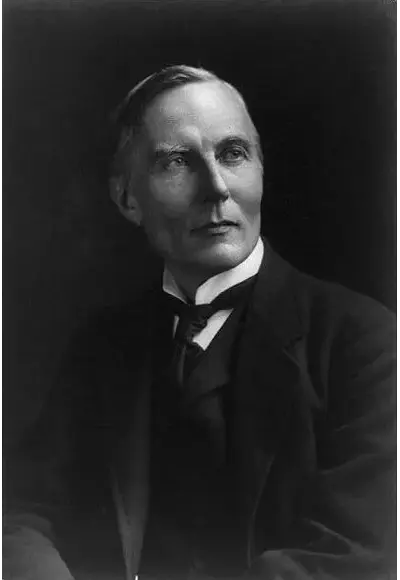
Herbert Albert Laurens Fisher OM PC FRS FBA was an English historian, educator, and Liberal politician. He served as President of the Board of Education in David Lloyd George's 1916 to 1922 coalition government.
