Richard Nixon Quotes
I will begin a new program to get private enterprise into the ghetto and the ghetto into private enterprise. I call it “Black Capitalism.” More black ownership of business and land and homes can be the multiplier of pride that will end our racial strife.
After Nixon was elected, he never did very much to make Black Capitalism come to pass, but he did make the concept a more respectable idea and it has grown slowly since.
Richard M. Nixon, 1913-1994, 37th President of the United States (Republican, CA), Campaign Advertisement, 1968
Sourced by: Eigen's Political and Historical Quotations


He was the Russian Reformer who ended serfdom and gave land to the peasants and then was assassinated. Ironically, both Alexander II and Lincoln were assassinated—because of their reform efforts—Lincoln for going too far; the Czar for not going far enough. See the Nickname that was given to the Czar: {622809}.


This view was extremely popular with the White establishment but decried by Du Bois and a few other Black leaders. Unfortunately for African Americans and the rest of the country. Washington in this quotation turned out to be very wrong. Blacks quickly produced all kinds of goods and services that whites wanted, but the Jim Crow culture of the South and much of the North would simply not allow any relations between the races that might diminish the friction. Southerners for over 100 years blamed and resented the Negro for the destruction of the South in the Civil War and trying to act as if he was equal to the whites. And Blacks blamed whites for the century of slavery and then not enforcing the laws and denying them civil rights and equality.


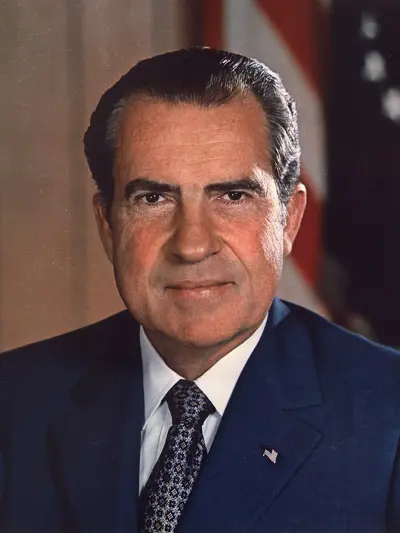
Richard Milhous Nixon was the 37th president of the United States, serving from 1969 to 1974. A member of the Republican Party, Nixon previously served as the 36th vice president from 1953 to 1961, having risen to national prominence as a representative and senator from California. After five years in the White House that saw the conclusion to the U.S. involvement in the Vietnam War, détente with the Soviet Union and China, and the establishment of the Environmental Protection Agency, he became the only president to resign from the office, following the Watergate scandal.
