Leopold I Quotes
I suspect that the great Continental powers will see a military Government at Paris with pleasure; they go rather far in their hatred of everything Parliamentary.
Louis Napoleon had lead a military takeover or the French democratic republican government. The other great European powers, with the exception of England and Belgium at the time did not have parliaments or they were powerless and the countries were all monarchies with most of the monarchies and the aristocracy hateful of anything involving sharing their power with legislatures. This is despite the incredible success of England with its Constitutional Monarchy and Queen who was very pleased with it.
Leopold I, 1790-1865, King of Belgium, Uncle of Queen Victoria of England, Letter to Queen Victoria, December 5, 1851
Sourced by: Eigen's Political and Historical Quotations


Although Queen Victoria was modern and liberal in many respects, the idea of self-determination by majority vote was unthinkable and certainly undesirable for her. She was not opposed to lands and peoples changing empires and peoples per se. It was how the decision was made that was critical to her. Sovereigns had been buying, selling, and trading lands and peoples for centuries. And after wars, the winners would also reallocate the kingdoms of the loser. But the idea of a democratic plebiscite making the decision was unacceptable. To her and many others of the day, power struggles between factions, politicians, and sovereigns themselves would cause them to inflame the passions of the people and/or bribe the people to vote to change their allegiance. She saw popular but possibly unscrupulous politicians “blackmailing” kings and queens and if payments from the treasury would not be made, the politician would stir up a movement to transfer allegiance to another sovereign who might well be willing to pay.

1st Earl of Beaconsfield


In early America and up to WWII, generally it was the conservatives like Fisher who were opposed to a strong military and many wanted no military at all except in times of war. It was President Dwight Eisenhower who turned the right wing of America into a pro military force.


China, after overthrowing the Manchu Dynasty was struggling among many factions for control of the government.

Anthony Ashley Cooper


One fascinating difference between the United States and France is that Americans verbally condemn emulating other nations, while in practice we take almost everything that is useful including their most ambitions emigrants. France, in contrast extolls the virtue of embracing the best of the human race, but rarely adopts that which did not originate or develop in France even today.
This quotation is a great demonstration of how much wiser and the better politician of all the crowned heads of Europe that Queen Victoria was. There were stirrings of freedom and desire for parliamentary government throughout Europe. Queen Victoria, even though and perhaps because she was a young woman, had a great feel for fairness and reasonableness and had read a great deal of history. There were some radical red socialists calling for complete radical revolution scaring European Royalty profoundly. They reacted very conservatively and with reaction, reverting to more tyrannical practices of the past urged in that path by very conservative, right wing advisors. Victoria also had little respect for some of the monarchs who had little interest in their people and much with their personal power and wealth. In the end, it was England which was the only nation which never had a serious radical socialist / communist threat, and that had much to do with Victoria’s political acumen and wisdom.

1st Baron Macaulay. He favored a House of Commons that was representative of property owners, a powerful House of Lords which were limited to the Aristocracy, and a Monarch who also had a great deal of power. He was not a democratic enthusiast.

This was a terribly accurate prediction of what occurred in South America. However even the smaller states then began to have self destructive cycles of destructive revoutions.


The “proofs” were diplomatic assurances—treaties—that England would guarantee the territorial integrity of Belgium. The British made strong diplomatic efforts to persuade Germany not to occupy Belgium. The German’s none the less send armies in under the excuse that if they did not, the French would occupy the country and have a strategic advantage over them. Diplomacy could do no more good. England had to send troops or renege on its obligations. So England was in WWI.


Hoover in his early career led the American relief effort to feed the starving of Europe after World War I. In addition to the major purpose of feeding people:
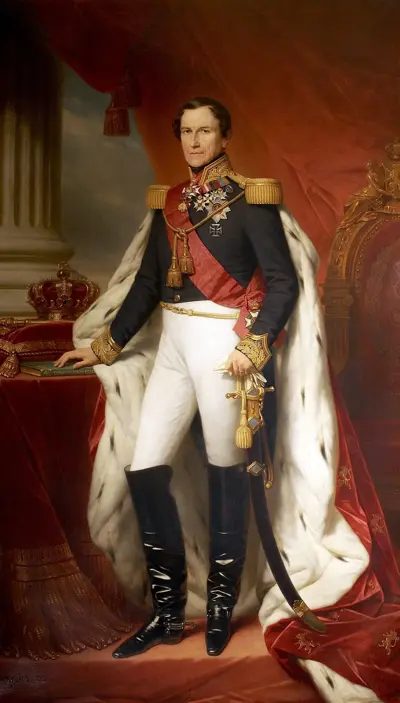
Leopold I was the first king of the Belgians, reigning from July 1831 until his death.
