Henry II Quotes
I order you to hold a free election but forbid you to elect any but Richard [d'Ilchester.]
Henry II, 1133-1189, King of England, Writ to the electors of Winchester
Sourced by: Eigen's Political and Historical Quotations


This quotation is a great demonstration of how much wiser and the better politician of all the crowned heads of Europe that Queen Victoria was. There were stirrings of freedom and desire for parliamentary government throughout Europe. Queen Victoria, even though and perhaps because she was a young woman, had a great feel for fairness and reasonableness and had read a great deal of history. There were some radical red socialists calling for complete radical revolution scaring European Royalty profoundly. They reacted very conservatively and with reaction, reverting to more tyrannical practices of the past urged in that path by very conservative, right wing advisors. Victoria also had little respect for some of the monarchs who had little interest in their people and much with their personal power and wealth. In the end, it was England which was the only nation which never had a serious radical socialist / communist threat, and that had much to do with Victoria’s political acumen and wisdom.


This is a very important quotation because it illustrates a characteristic of most South American (and many other world) cultures. Namely, that respect and dignity are more important than freedom. There is even a Spanish term conveying the importance of respect: Respecto! This is very different from the Anglo-American tradition where if one has freedom, he is little concerned with what others think of him, and no amount of respect would offset the loss of freedom. The person who is free, has the dignity that he needs. The importance of respect over freedom was also a major characteristic of European Fascism in the 1930s.


His views are a mix of modernism and fundamentalism. He favors democracy and elections but also favored the Taliban destroying the great ancient Buddha statues when he was called an idol worshipper for urging the preservation of art.


With so many revolutionary rulers of new nations suppressing all opposition, the history of Ataturk and Turkey is unique. Ataturk was so popular and his People’s Party so successful that there was no opposition and Turkey had one party rule. However, Ataturk was determined to have Turkey become a parliamentary democracy as good as the Western nations of Europe. So a tradition of multi-party democracy was needed. So Ataturk actually went to his friend Fethi Okyar and asked him to start an opposition party and oppose the government. Fethi was a strong supporter of the revolution and generally was in concurrence with Ataturk and the People’s Party on everything. Ataturk however convinced him that they had to start a tradition that would take Turkey through the future, and he did create a new party-- Serbest Cumhuriyet Fırkası (Liberal Republican Party) and worked hard to find differences with the People’s Party and the Government. One immediate contribution was the oversight that the new party provided—a strong tradition that exists to this day in Turkey.


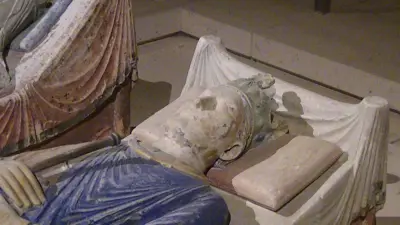
Henry II, also known as Henry Curtmantle (French: Court-manteau), Henry FitzEmpress or Henry Plantagenet, was King of England from 1154 until his death in 1189. He was the first king of the House of Plantagenet. King Louis VII of France made him Duke of Normandy in 1150. Henry became Count of Anjou and Maine upon the death of his father, Count Geoffrey V, in 1151. His marriage in 1152 to Eleanor of Aquitaine, whose marriage to Louis VII had recently been annulled, made him Duke of Aquitaine. He became Count of Nantes by treaty in 1185. Before he was 40 he controlled England, large parts of Wales, the eastern half of Ireland and the western half of France; an area that was later called the Angevin Empire. At various times, Henry also partially controlled Scotland, Wales and the Duchy of Brittany.
