James Barron Quotes
I must contend that the liberty and perhaps the lives of so many valuable & estimable Americans ought not to be sacrificed to points of honor, taken in the abstract.
Opponents claimed that it would be dishonorable to negotiate with terrorist states and to pay ransom at any time. This tension between principle and empathy with American prisoners first emerged in the Barbary Wars, but has been with America ever since. Our policy position of honor vis a vis terrorists has been the same since then. We do not negotiate. However, exceptions have been made many times in American history, as it was here thanks to military leaders like Barron. This was the origin of the military tradition of never leaving Americans behind in when they have been captured in conflicts that was so contentious such as the Afghanistan and Iraq Wars.
James Barron, 1768-1851, Naval Commodore, Reply to other Americans who were opposed to paying a ransom for American sailors who have been taken by the Barbary States and were being held in terrible conditions, Quoted in Joseph Wheelan, Jefferson’s War
Sourced by: Eigen's Political and Historical Quotations

While to Madison the principle that “war is better than tribute” was “settled policy”, there were many who disagreed. See {640867} as an example.

Thompson’s son was serving with U. S. forces in the Iraq War at the time.

See {640847}, {640845} & {640846}. The capitalization is exactly as Adams wrote it. Note the omission of a capital letter for “congress” for whom he and many others had little respect even then.


Thompson’s son was serving with U. S. forces in the Iraq War at the time.

The first two lines of the song became the slogan a few years later of veterans of the Normandy invasion of WWII.

On October 31, 1803, Tripolitan forces captured the ship Philadelphia and imprisoned the whole crew. The Pasha (provincial governor) of Tripoli, Yusef Karamanli demanded that the United States not only pay a ransom for the prisoners but an annual tribute to Tripoli.
Response to an offer by Commodore Preble to exchange prisoners.

This line was used in the WPA Federal Theater Project. The play was closed down, because the State Department was distressed that the Federal Theater quoting heads of State might be insulting to the world leaders. Mussolini was another character in the play and he was depicted as the boorish thug that he turned out to be. It was that which offended the government officials who closed the show before it could open. FDR used a similar line 6 years later. See {32529} . Dolores Ibarruri in the Spanish Civil War is quoted with a similar phrase at about the same time. See {604321}

This statement is perhaps the greatest and most eloquent description of the United States exceptionalism and its behavior in WWII. Such a statement could only come from a non-American.


In the 18th Century, the Islamic Barbary States combined their religious beliefs for Jihad against non-believers with a classic criminal enterprise--piracy. They would authorize corsairs to outfit ships and attack Christian merchant ships on the high seas. They would capture the ship and the cargo, which would be split with the ruler of the country. The crew and passengers would by “rented out” as slaves until they would be ransomed, the proceeds of which would also be shared. To motivate a larger ransom, the captives were regularly tortured as well as worked almost to death. The Barbary Pirates encouraged the “slaves” to write to their relatives, friends and governments to try and raise the ransom. Individual Christian countries were offered a “treaty” whereby for an annual payment of tribute to the Barbary country, the corsairs of that country would not attack ships flying the flag of the country that paid the tribute. The Christian country had to make 4 different tribute payments to each of the 4 Barbary nations. Most of the European powers were paying the tribute even though some could easily defeat the Corsair navies in a war. The cost of outfitting a fleet for war was much more greater than paying the tribute. The new nation of the United States was good pickings for the Barbary pirates and there was a period of several decades where the Americans had to create a policy to pay tribute or go to war. At different times America did both. Jefferson argued for War rather than pay the blackmail tribute.

This quotation gives us a concept of the WWII home front effort where virtually everyone in American society was personally involved on a daily basis in the war. See also {637440}. This was so dramatically different from the home fronts for the wars in Afghanistan and Iraq where most of the American public had no direct contact with the war effort and was not called upon or even needed to do anything.
Adams urged paying tribute to the Barbary Pirates who had an incredible extortion racket going in the Mediterranean. If nations would pay them an annual sum each year, they would not attack and seize merchant ships of that country and sell the ships and goods while holding the sailors for ransom. Most of the European powers were paying the annual tribute as they calculated that it was cheaper than patrolling the Mediterranean with warships or going to war with the Barbary States. More important for Adams was that he did not think that the country would support such a military action. See {640847} That was Adams’ thinking. Jefferson however, sent our Navy and Marines to our first foreign war, and they were very effective. However, despite the American military victories, and because of the inability for the European powers to collaborate and share the burden of naval patrol, the United States went back to the craven policy of paying the blackmail. See {640846} & {640848}.

Marie Joseph Paul Yves Roch Gilbert du Motier. The Barbary Pirates had an incredible extortion racket going in the Mediterranean. If nations would pay them an annual sum each year, they would not attack and seize merchant ships of that country and sell the ships and goods while holding the sailors for ransom.

The American sailors had been captured and were being held for ransom by the Barbary Pirates in terrible conditions. The pirates stated that they were slaves and would be sold if the United States did not come up with enough ransom money. After much debate in America, a squadron of Naval Troops had been dispatched to the Mediterranean where they would “negotiate” with cannon—attacking the ports of the Barbary States.

This would be like an American President firing the congressional chaplains. However this is only one small, but telling, example of Atatuk’s secularization of the nation which had a great deal to do with Turkey becoming a modern great power—by far the strongest and most developed of the Islamic world.


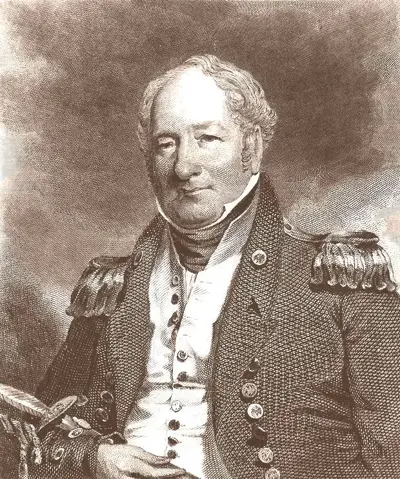
- Born: September 15, 1768
- Died: April 21, 1851
- Nationality:
- Profession:
James Barron was an officer in the United States Navy. He served in the Quasi-War and the Barbary Wars, during which he commanded a number of famous ships, including USS Essex and USS President. As commander of the frigate USS Chesapeake, he was court-martialed for his actions during the Chesapeake–Leopard affair in 1807 which led to the surrender of his ship to the British. After criticism from some fellow officers, the resulting controversy led Barron to a duel with Stephen Decatur, one of the officers who presided over his court-martial. Suspended from command, he pursued commercial interests in Europe during the War of 1812. Barron finished his naval career on shore duty, becoming the Navy's senior officer in 1839.
