Andrew Johnson Quotes
I know we have an illegitimate, swaggering, bastard, scrub aristocracy which assumes to know a great deal, but which, when the flowing veil of pretension is torn off, is seen to posses neither talent nor information on which one can rear a useful superstructure.
Johnson was a tailor by occupation, and was frequently derided as unfit for high public office. Jefferson Davis, one of his detractors, came in for his share of reply invective.
Andrew Johnson, 1808-1875, 17th President of the United States (War Democrat, TN), Reply to Jefferson Davis
Sourced by: Eigen's Political and Historical Quotations


“Lord Haw Haw” was the name that he used in his propaganda broadcasts from Germany to England. Despite the fact that the broadcasts were anti-British and pro German, many in Britain listened to him regularly. He was very witty and many of his criticisms of British society were views held by many patriots in Britain. As pure entertainment, he was better than most of the BBC broadcasts during WWII. At the end of the war, Joyce was captured, tried and executed for treason.


This editorial from an Alabama newspaper in 1856 is a wonderful illustration of the animosity held by many in the South towards the North. It also shows the major difference in egalitarianism between the North and the South at that time. The only Southerners who could read were the upper class who were terribly fearful of the effects of upward mobility of whites in a slave free industrial democracy. “Mechanics” at the time referred to all skilled craftsmen.


Scott was the leading military man of the day.

Describing Secretary of State James Baker:


The debate about equality and meritocracy often hinges on whether equality in a democracy is equality of results or equality of opportunity.

The United States money was then on the Gold Standard. The country was growing and needed more money in circulation. But most of the gold that might be available was in England and English bankers could control much of the U. S. economy. The Populists and the Democrats wanted us to use silver to back U. S. money as there was plenty of silver in the United States. The Republicans would not relent and depression was upon the country. A half century later, it would be Republican President Richard M. Nixon, who took the United States off the gold standard. Lease was far ahead of her time.


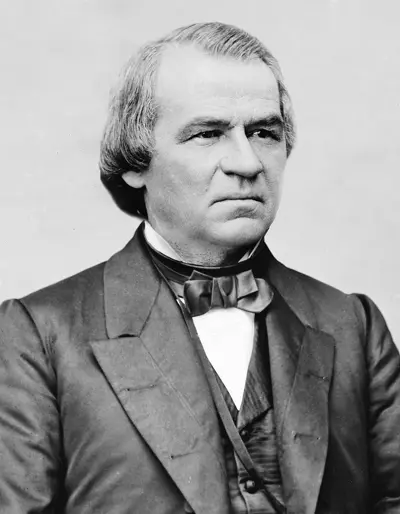
Andrew Johnson was the 17th president of the United States, serving from 1865 to 1869. He assumed the presidency as he was vice president at the time of the assassination of Abraham Lincoln. Johnson was a Democrat who ran with Lincoln on the National Union ticket, coming to office as the Civil War concluded. He favored quick restoration of the seceded states to the Union without protection for the former slaves. This led to conflict with the Republican-dominated Congress, culminating in his impeachment by the House of Representatives in 1868. He was acquitted in the Senate by one vote.
